Plot No. C40, Road No. 21Y, MIDC, Wagle Industrial Estate,
Thane(W)-400604, MH, India.
Plot No. C40, Road No. 21Y, MIDC, Wagle Industrial Estate,
Thane(W)-400604, MH, India.

 Your enquiry has been submitted
Something problem with the server. Try again.
 Your enquiry has been submitted
| Ingredients | Gms/Litre |
|---|---|
| Casein enzymic hydrolysate | 10.000 |
| Dextrose | 5.000 |
| Bromocresol purple | 0.040 |
| Agar | 15.000 |
| Final pH (at 25°C) | 6.7±0.2 |
Formula adjusted, standardized to suit performance parameters
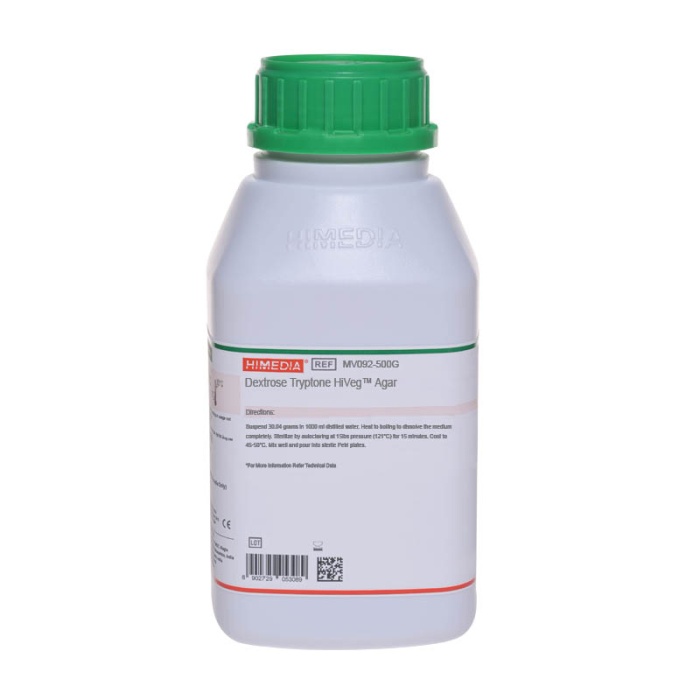
Suspend 30.04 grams in 1000 ml distilled water. Heat to boiling the medium completely. Sterilize by autoclaving at 15 lbs pressure (121°C) for 15 minutes. Cool to 45-50°C. Mix well and pour into sterile Petri plates.
Canned foods are most often prone to flat-sour spoilage due to contamination by either mesophilic or thermophilic aerobic spore-formers. Inadequate heat processing is commonly responsible for flat-sour spoilage since spores of mesophilic bacteria are moderately resistant to moist heat. Also Bacillus stearothermophilus is the typical species responsible for this type of spoilage (1, 2). Bacillus coagulans (Bacillus thermoacidurans, a soil organism) is frequently isolated from flat-sour spoilage of canned tomato and dairy products. In flat-sour spoilage, carbohydrates are fermented with the production of lower fatty acids, which sour the product. The small amount of gas produced does not affect the flat appearance of the ends of container.
Dextrose Tryptone Agar, formulated by Williams is recommended for the detection and enumeration of thermophilic flat sour spoilage organisms (3). It is also recommended for general cultural studies by Cameron (4) and other associations (5-8). Dextrose Tryptone Agar is also useful for enumeration of mesophiles and thermophiles in cereal and cereal products, dehydrated fruits, vegetables and spices (9).
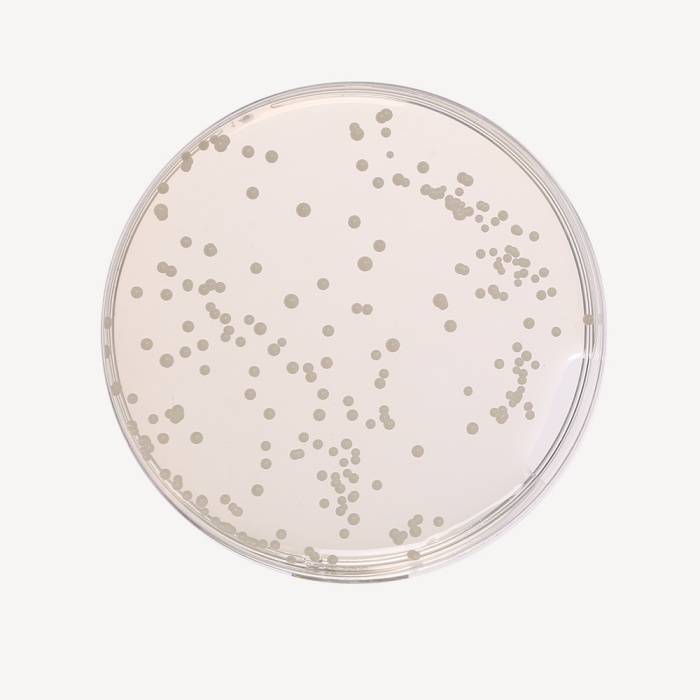
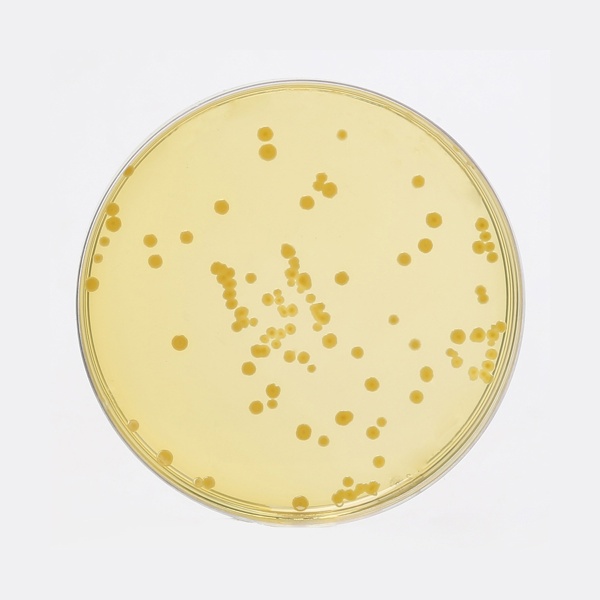
Casein enzymic hydrolysate provides essential nutrients to the organisms. Dextrose serves as an energy source by being the fermentable carbohydrate while bromo cresol purple is a pH indicator. Acid producing organisms produce yellow colonies. The plates should be incubated at 55°C for 48 hours in a humid incubator.
While using the agar media, serially diluted test sample are mixed with the media in sterile Petri dishes. Standard procedures issued by various associations should be followed for testing of samples.
Appearance: Light yellow to greenish yellow coloured granular medium
Gelling: Firm, comparable with 1.5% Agar gel
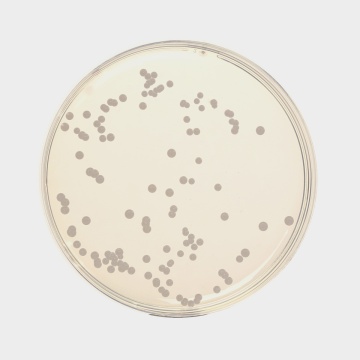
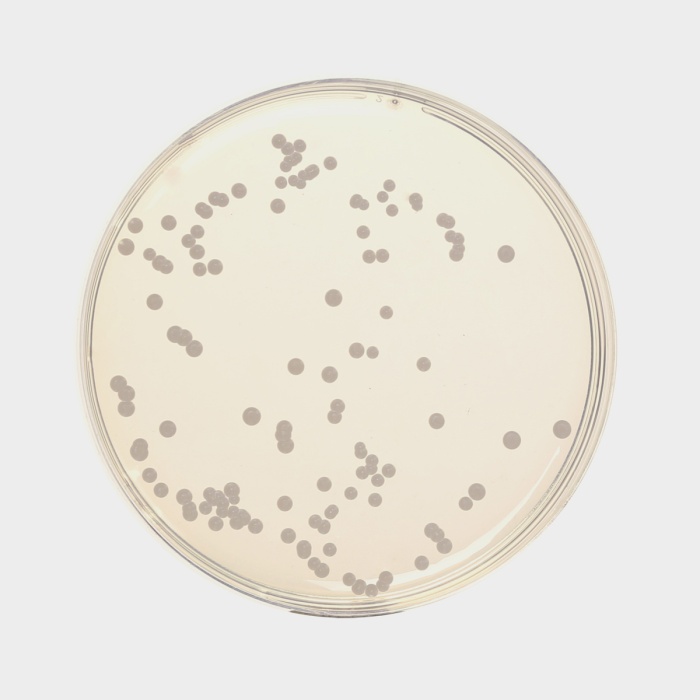
Colour and Clarity of prepared medium: Purple coloured, clear to slightly opalescent gel forms in Petri plates
Reaction: Reaction of 3% w/v aqueous solution at 25°C. pH: 6.7±0.2
pH: 6.50-6.90
| Organism | Inoculum (CFU) | Growth | Recovery | Colour of colony |
|---|---|---|---|---|
| Bacillus brevis ATCC 8246 | 50-100 | good-luxuriant (with or without dextrose fermentation) | 50-70% | yellow |
| Bacillus coagulans ATCC 8038 | 50-100 | good-luxuriant | 50-70% | yellow |
| Bacillus stearothermophilus ATCC 7953 | 50-100 | good-luxuriant | 50-70% | yellow |
Store below 30°C in tightly closed container and the prepared medium at 2-8°C. Use before expiry date on the label.
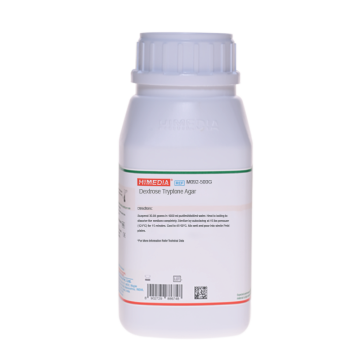
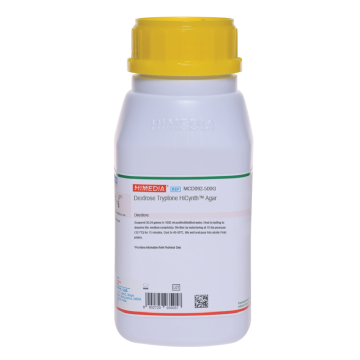
| Product Name | Dextrose Tryptone Agar, Granulated |
|---|---|
| SKU | GM092 |
| Product Type | Granulated |
| Physical Form | Granular |
| Origin | Animal |
| Packaging type | HDPE |
| References | 1. Gordon R. E., Haynes and Pang C. H. N., 1973, The Genus Bacillus, Agriculture Handbook No. 407, U.S. Department ofAgriculture, Washington, D.C. 2.Hersom A. C., and Hulland E. D., 1964, Canned Foods, An Introduction to Their Microbiology, (Baumgartner) 5th Ed.Chemical Publishing Company, Inc. New York, N.Y. 3.Williams O. B., 1936, Food Res., 1:217. 4.Cameron E. J., 1936, J .Assoc. Official Agr. Chem., 19:433. 5.Association of Official Analytical Chemists, 1978, Bacteriological Analytical Manual, 5th Edition, AOAC, Washington,D.C. 6.American Public Health Association, 1972, Standard Methods for the Examination of Dairy Products, 13th Ed. APHA,Washington, D.C. 7.National Canners Association, 1968, Laboratory Manual for Food Caners and Processors, Vol. I 9.National Canners Association, 1954, A Laboratory Manual for the Canning Industry, 1st Edition, National CannersAssociations, Washington. 10.Downes F. P. and Ito K., (Eds.), 2001, Compendium of Methods for the Microbiological Examination of Foods, 4th Ed.,APHA, Washington, D.C. |