Plot No. C40, Road No. 21Y, MIDC, Wagle Industrial Estate,
Thane(W)-400604, MH, India.
Plot No. C40, Road No. 21Y, MIDC, Wagle Industrial Estate,
Thane(W)-400604, MH, India.

 Your enquiry has been submitted
Something problem with the server. Try again.
 Your enquiry has been submitted
Recommended for selective isolation and enumeration of Neisseria species especially Neisseria gonorrhoeae.
| Ingredients | g/L |
|---|---|
| Peptone | 23.000 |
| Starch | 1.000 |
| Sodium chloride | 5.000 |
| Dextrose (Glucose) | 2.500 |
| Agar | 20.000 |
| Final pH (at 25°C) | 7.4±0.2 |
**Formula adjusted, standardized to suit performance parameters
Suspend 51.5 grams in 900 ml purified/distilled water. Heat to boiling to dissolve the medium completely. Dispense in 90 ml amounts in flasks and sterilize by autoclaving at 15 lbs pressure (121°C) for 15 minutes. Cool to 45-50°C and aseptically add following sterile solutions :
The laboratory diagnosis of gonorrhoea depends on the demonstration of intracellular diplococci in smears and on the isolation and identification of Neisseria gonorrhoeae by culture procedures. Many different complex media have been introduced for the isolation of Gonococcus but excellent results may be obtained by using the medium introduced by Thayer and Martin. The original formula, an enriched chocolate agar medium containing the antibiotics ristocetin and polymyxin B, was recommended for the isolation of N.gonorrhoeae and N.meningitidis. However, the medium was found to be inhibitory against other Neisseriae and also suppressed Pseudomonas and Proteus species. Thayer and Martin reported the successful use of vancomycin, colistin methane and nystatin. This combination showed growth of N.gonorrhoeae while inhibiting the growth of staphylococci and saprophytic Neisseriae (1).
Carpenter and Morton reported an improved medium to isolate gonococci in 24 hours (2). Later on the efficiency of GC medium supplemented with haemoglobin and yeast concentrate was demonstrated for isolating gonococci (3). Subsequently Thayer and Martin Medium was developed for the primary isolation of N.gonorrhoeae and N.meningitidis from specimens containing mixed flora collected from throat, vagina, rectum and urethra (4,5). Thayer and Martin (5) used vancomycin, colistin and nystatin. Martin and Lester (6) used an additional antibiotic trimethoprim to make the medium selective. Modified Thayer Martin Medium Base is used for selective isolation and enumeration of pathogenic Neisseria species especially N.gonorrhoeae. In 1947, an improved medium for isolating Gonococcus in 24 hours was reported by Carpenter and Morton (2).
Peptone provide nutrients to the organisms while starch neutralizes the toxic fatty acids if present in the agar. Addition of lysed blood after heating supplies vitamins,amino acids, coenzymes etc. which enhances the growth of pathogenic Neisseria. Vancomycin and colistin methane sulphate inhibit gram-positive and gram-negative bacteria respectively (7). Some strains of Capnocytophaga species may grow on this medium when inoculated with oropharyngeal specimens (8). Modified Thayer Martin Medium Base added with chocolate agar and antibiotics minimizes the overgrowth of gonococci and meningococci by contaminants, suppresses the growth of saprophytic Neisseria species and stimulates the growth of pathogenic Neisseria. Humidity is essential for successful isolation of gonococci. All presumptive Neisseriae should be confirmed by carbohydrate fermentation tests and serological tests. Some strains of Neisseriae may fail to grow in presence of antibiotics.
Clinical samples : Throat swab, vaginal secretions, rectum swabs and urethral swab
For clinical samples follow appropriate techniques for handling specimens as per established guidelines (9,10). After use, contaminated materials must be sterilized by autoclaving before discarding.
In Vitro diagnostic Use only. For professional use only. Read the label before opening the container. Wear protective gloves/ protective clothing/eye protection/face protection. Follow good microbiological lab practices while handling specimens and culture. Standard precautions as per established guidelines should be followed while handling clinical specimens. Safety guidelines may be referred in individual safety data sheets.
Performance of the medium is expected when used as per the direction on the label within expiry period when stored at the recommended temperature.
Appearance
Cream to yellow homogeneous free flowing powder
Gelling
Firm, comparable with 2.0% Agar gel.
Colour and Clarity of prepared medium
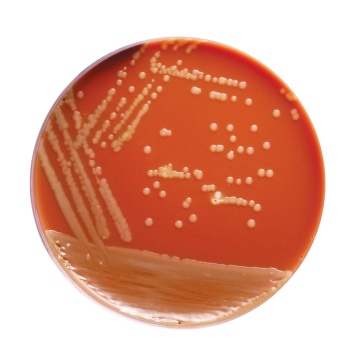
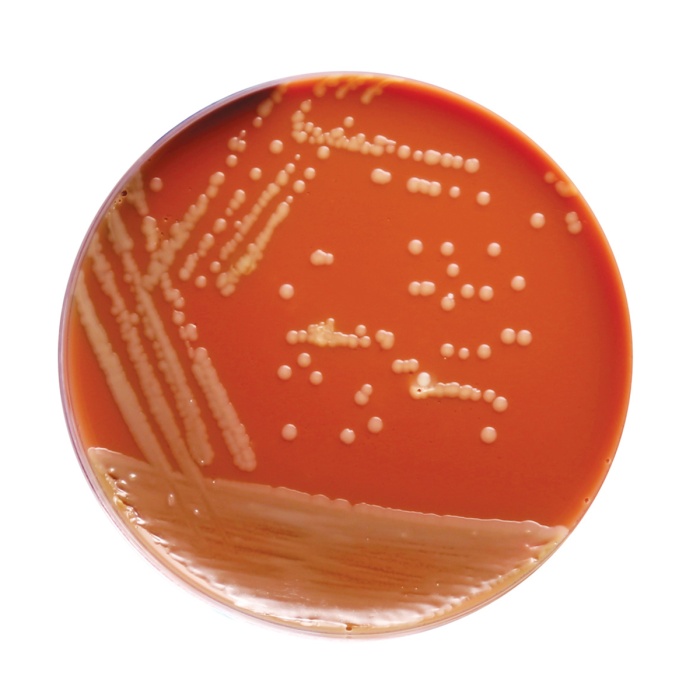
Basal medium: Light amber coloured clear to slightly opalescent gel. After addition of sterile lysed blood and supplements : Chocolate coloured opaque gel forms in Petri plates.
Reaction
Reaction of 5.15% w/v aqueous solution at 25°C. pH: 7.4±0.2
pH
7.20-7.60
Cultural Response
Cultural characteristics observed on addition of blood with subsequent heating and antibiotic solution (3mcg Vancomycin &1.5 mcg Colistin methane sulphate per ml of medium) after an incubation at 35-37°C for 40-48 hours.
| Organism | Inoculum (CFU) | Growth | Recovery | Colour of colony |
|---|---|---|---|---|
| Escherichia coli ATCC 25922 (00013*) | >=104 | inhibited | 0% | |
| Neisseria gonorrhoeae ATCC 19424 | 50-100 | good-luxuriant | >=50% | small, grayish-white to colourless, mucoid |
| Neisseria meningitidis ATCC 13090 | 50-100 | good-luxuriant | >=50% | medium to large, blue-gray, mucoid |
| Proteus mirabilis ATCC 25933 | >=104 | inhibited | 0% |
Key: *Corresponding WDCM numbers.
Store between 10-30°C in a tightly closed container and the prepared medium at 2-8°C. Use before expiry date on the label. On opening, product should be properly stored dry, after tightly capping the bottle inorder to prevent lump formation due to the hygroscopic nature of the product. Improper storage of the product may lead to lump formation. Store in dry ventilated area protected from extremes of temperature and sources of ignition. Seal the container tightly after use. Product performance is best if used within stated expiry period.
User must ensure safe disposal by autoclaving and/or incineration of used or unusable preparations of this product. Follow established laboratory procedures in disposing of infectious materials and material that comes into contact with clinical sample must be decontaminated and disposed of in accordance with current laboratory techniques (9,10).
| Product Name | Modified Thayer Martin Medium Base (w/o Supplement) |
|---|---|
| SKU | M795 |
| Product Type | Regular |
| Physical Form | Powder |
| Origin | Animal |
| Packaging type | HDPE |
| References | 1.Finegold S. M. and Martin W. J., 1982, Bailey & Scotts Diagnostic Microbiology, 6th Ed., 102-1052.Carpenter C. M. and Morton H. E., 1947, Proc. N.Y. State Assoc. Public Hlth. Labs., 27:58.3.Carpenter C. M., Bucca M. A., Buck T. C., Casman E. P., Christensen C. W., Crowe E., Drew R., Hill J., Lankford C. E.,Morton H. E., Peizer L. R., Shaw C. I., Thayer J. D., 1949, Am. J. Syphil. Gonorrh. Vener. Dis., 33:164.4.Martin J. E., Billings T. E., Hackney J. F. and Thayer J. D., 1967, Public Hlth. Rep., 82:361.5.Thayer J. and Martin J. E. Jr., 1966, Public Health Rep., 81:559.6.Martin J. E. Jr. and Lester A., 1971, HSMHA Hlth. Service Rep., 86(1): 30.7.Reichart C. A., Rupkey C. M., Brady W. E. and Hook E. W., 1989, J. Clin. Microbiol., 27:8088.MacFaddin J. F., 1985, Media for Isolation-Cultivation-Identification-Maintenance of Medical Bacteria, Vol. I, Williamsand Wilkins, Baltimore. |