Plot No. C40, Road No. 21Y, MIDC, Wagle Industrial Estate,
Thane(W)-400604, MH, India.
Plot No. C40, Road No. 21Y, MIDC, Wagle Industrial Estate,
Thane(W)-400604, MH, India.

 Your enquiry has been submitted
Something problem with the server. Try again.
 Your enquiry has been submitted
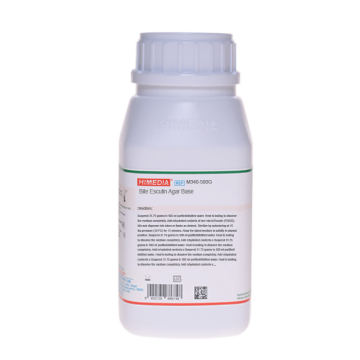
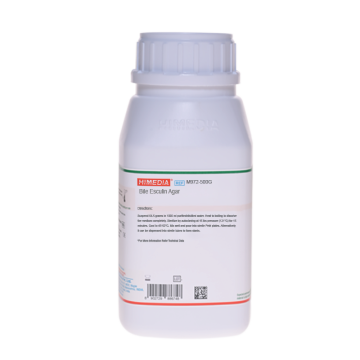
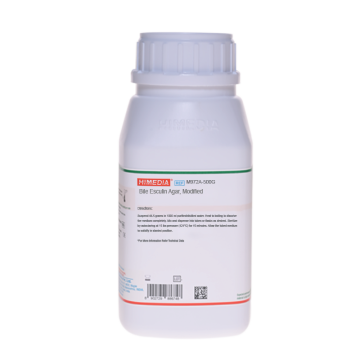
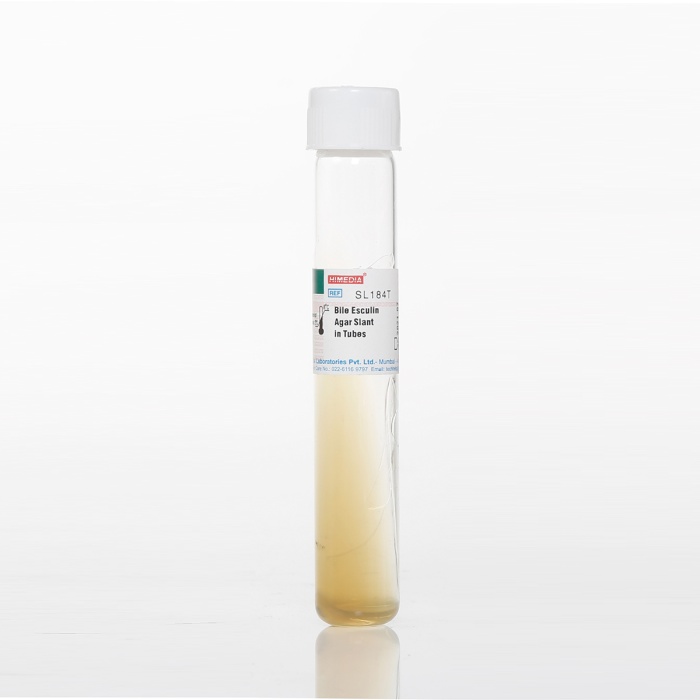
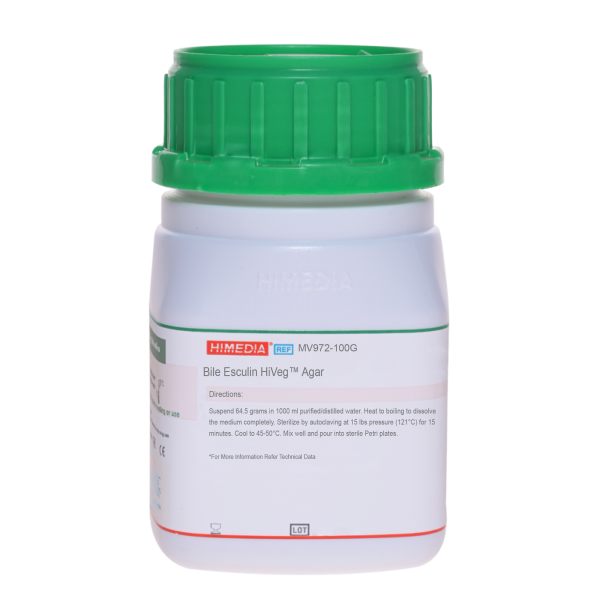
Bile Esculin HiVeg® Agar / Agar Base is a differential medium recommended for isolation and presumptive identification of Group D Streptococci from food and pharmaceutical products.
| Ingredients | MV972 Grams/Litre | MV340 Grams/Litre |
|---|---|---|
| HiVeg® peptone | 25.00 | 22.00 |
| HiVeg® extract | 6.00 | 6.00 |
| Synthetic detergent No.Il | 2.00 | 5.00 |
| HiVeg® hydrolysate | 15.00 | 15.00 |
| Esculin | 1.00 | - |
| Ferric citrate | 0.50 | 0.50 |
| Agar | 15.00 | 15.00 |
| Final pH (at 25°C) | 6.6± 0.2 | |
** Formula adjusted, standardized to suit performance parameters
| Vegetable based (Code MV) | Animal based (Code M) |
|---|---|
| MV972/MV340 | M972/M340 |
| HiVeg® peptone | Peptic digest of animal tissue |
| HiVeg® extract | Beef extract |
| Synthetic detergent No.Il | Oxgall |
| HiVeg® hydrolysate | Casein enzymic hydrolysate |
6.6± 0.2
(MV340) : Esculin (FD050)
121°C / 15 minutes.
Dry Medium Below 30°C, Prepared Medium 2-8°C.
Suspend 64.5 grams of MV972 or 63.5gms of MV340 in 1000 ml distilled water. Heat to boiling to dissolve the medium completely. Add 1 gram of esculin (2 vials of FD050) in MV340. Mix and dispense into tubes or flasks as desired. Sterilize by autoclaving at 15 lbs pressure (121°C) for 15 minutes. Allow the tubed medium to solidify in slanted position.
This medium is prepared by completely replacing animal based peptones with vegetable peptones which are free from BSE/TSE risks. Bile Esculin HiVeg® Agar is the modification of Bile Esculin Agar which was formulated by Swan (1) for the isolation and identification of Group D Streptococci from food. The medium contains Synthetic detergent No. II that inhibits gram positive bacteria other than group D Streptococci and Enterococci. Enterococci and Group D Streptococci were able to split esculin to esculetin and dextrose, which reacts with ferric citrate producing brownish black precipitate (2). Ferric citrate is incorporated into the medium as an indicator of esculin hydrolysis and resulting esculatin formation. Originally Bile Esculin Test was used for identification of Enterococci, but it was found that this test is also shared by Group D Streptococci (3) and therefore it is recommended that other tests such as salt tolerance be performed while identifying Enterococci (4). Similarly this medium was also shown to aid differentiation of Enterobacteriaceae, Klebsiella, Enterobacter-Serratia division from other Enterobacteriaceae genera (5) on the basis of esculin hydrolysis. Occasional strains of viridans Streptococci blacken the medium or display weakly positive reactions (6).
Appearance of Powder
Brownish yellow coloured may have slightly greenish tinge, homogeneous, free flowing powder.
Gelling
Firm, comparable with 1.5% Agar gel.
Colour and Clarity
Yellow coloured, clear to slightly opalescent gel with a bluish tinge forms in petri plates.
Reaction
Reaction of 6.45% w/v of MV972 or 6.35% w/v of MV340 aqueous solution is pH 6.6± 0.2 at 25°C.
Cultural Response
Cultural characteristics observed after an incubation at 35 - 37°C for 18-24 hours in an increased atmosphere of carbon dioxide
| Organisms (ATCC) | Inoculum (CFU) | Growth | Recovery | Esculin hydrolysis |
|---|---|---|---|---|
| Enterococcus faecalis (29212) | 102-103 | luxuriant | >50% | + |
| Sreptococcus pyogenes (19615) | 102-103 | none-poor | <10% | - |
| Proteus mirabilis (25933) | 102-103 | luxuriant | >50% | - |
Key: + = Blackening of the medium
- = No Change
| Product Name | Bile Esculin HiVeg® Agar |
|---|---|
| SKU | MV972 |
| Product Type | HiVeg™ |
| Physical Form | Powder |
| Origin | Animal Free (Veg) |
| Packaging type | HDPE |
| References | 1. Koneman E. W., Allen S. D., Janda W. M., Schreckenberger P. C., Winn W. C. Jr., 1992, Colour Atlas and Textbook ofDiagnostic Microbiology, 4 th Ed., J. B. Lippinccott Company |