HiMedia Laboratories GmbH, Marie-Curie-Str. 3, 64683, Einhausen, Germany.

 Your enquiry has been submitted
Something problem with the server. Try again.
 Your enquiry has been submitted
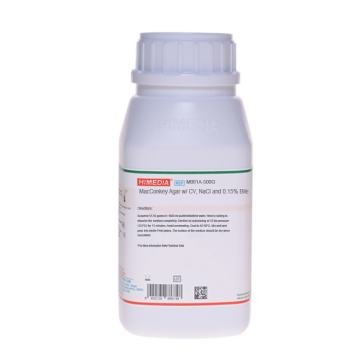
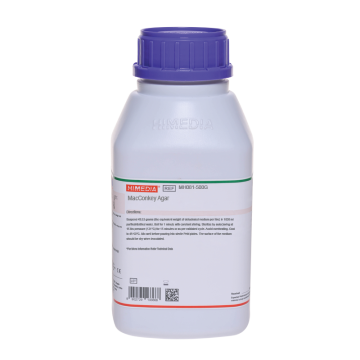
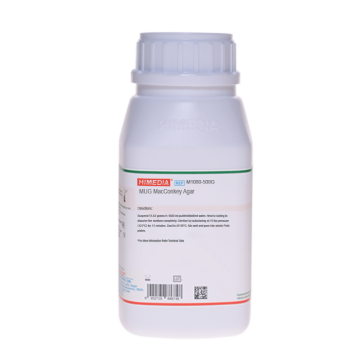
Medium 7. MacConkey Agar is used for selective isolation of Escherichia coli enteric bacteria in accordance with Indian Pharmacopoeia, 2010.
| Ingredients | Gms / Litre |
|---|---|
| Peptones (meat and casein, equal parts) | 3.000 |
| Pancreatic digest of gelatin | 17.000 |
| Lactose | 10.000 |
| Bile salts | 1.500 |
| Sodium chloride | 5.000 |
| Crystal violet | 0.001 |
| Neutral red | 0.030 |
| Agar | 13.500 |
| pH after sterilization (at 25°C) | 7.1±0.2 |
**Formula adjusted, standardized to suit performance parameters
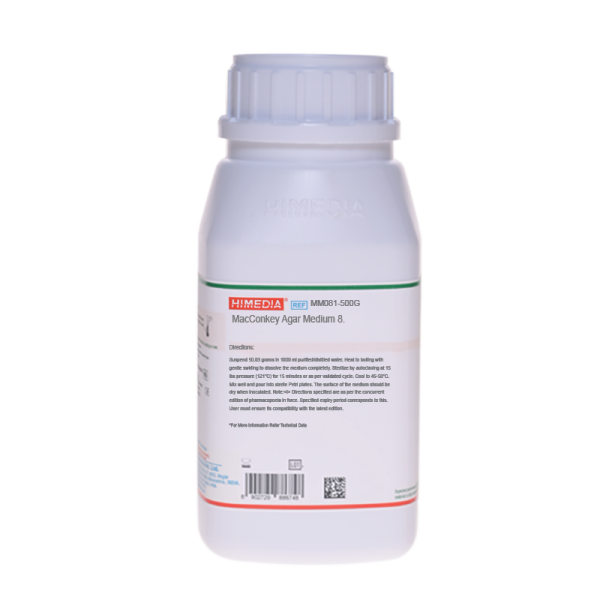
Suspend 50.03 gms of medium in 1000 ml purified/distilled water. Heat to boiling with gentle swirling to dissolve the medium completely. Sterilize by autoclaving at 15 lbs pressure (121°C) for 15 minutes. Cool to 45-50°C. Mix well before pouring into sterile Petri plates. The surface of the medium should be dry when inoculated.
MacConkey Agar is the earliest selective and differential medium for cultivation of enteric microorganisms from a variety of clinical specimens (1, 2). Subsequently MacConkey Agar and Broth have been recommended for use in microbiological examination of foodstuffs (3) and for direct plating / inoculation of water samples for coliform counts (4). These media are also accepted by the Standard Methods for the Examination of Milk and Dairy Products (5) and pharmaceutical preparations as per Indian Pharmacopoeia (6). It is recommended for selective isolation and differentiation of lactose fermenting and lactose non-fermenting enteric bacteria.
Original medium contains protein, bile salts, sodium chloride and two dyes. The selective action of this medium is attributed to crystal violet and bile salts, which are inhibitory to most species of gram-positive bacteria. Essential nutrients, vitamins and nitrogenous factors are provided by a combination of peptones(meat and casein) and pancreatic digest of gelatin. Lactose is the fermentable source of carbohydrate. Sodium chloride maintains the osmotic balance in the medium. Neutral red is the pH indicator.
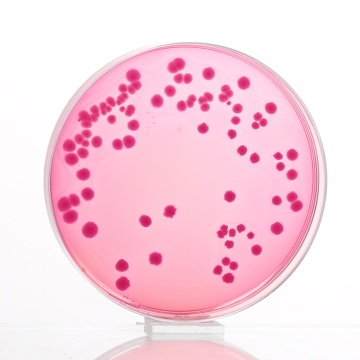
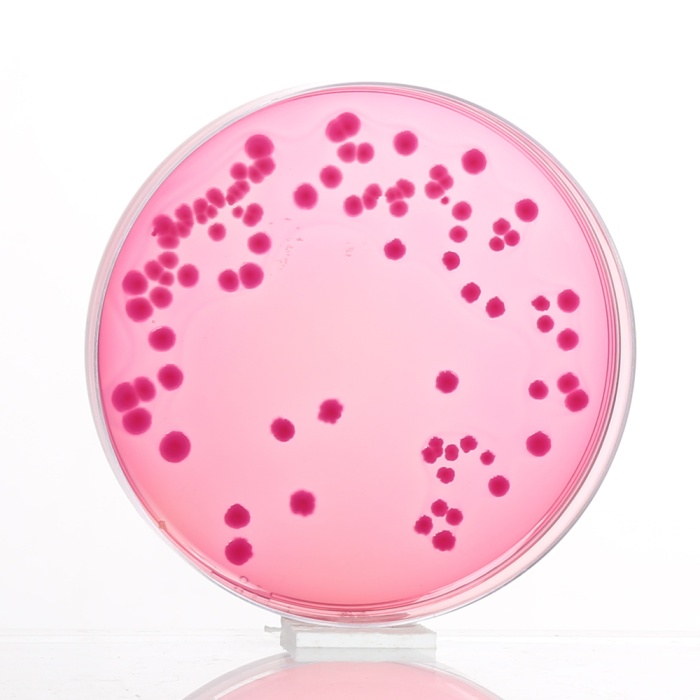
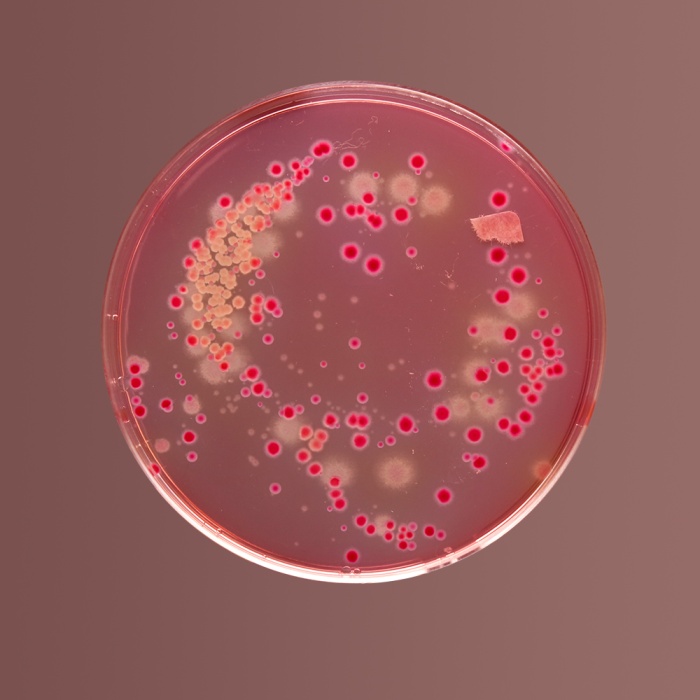
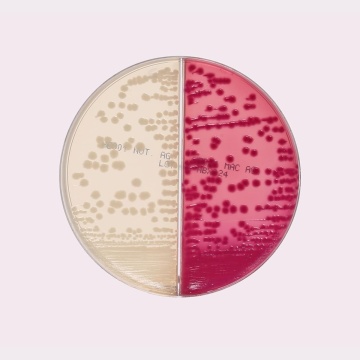
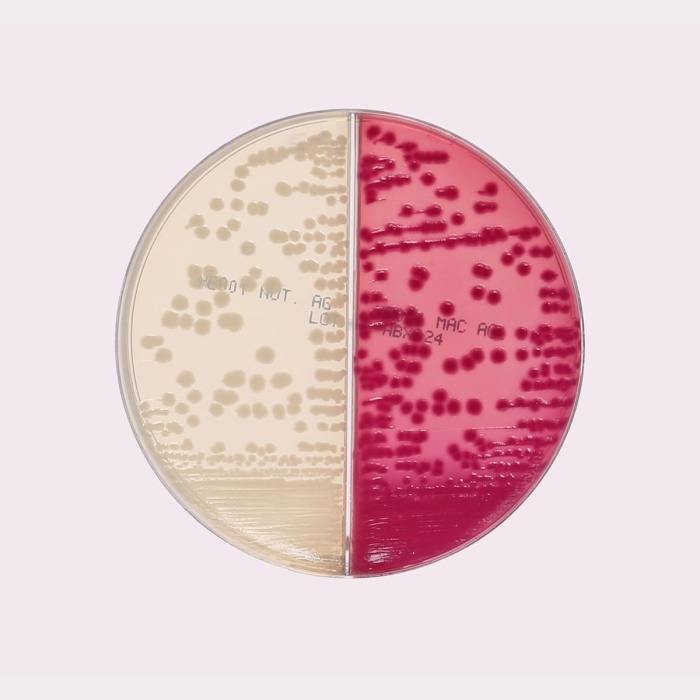
After enrichment of Escherichia coli in MacConkey Broth (MM083), it is then subcultured on MacConkey Agar. Gram-negative bacteria usually grow well on the medium and are differentiated by their ability to ferment lactose. Lactose fermenting strains grow as red or pink and may be surrounded by a zone of acid precipitated bile. The red colour is due to production of acid from lactose, absorption of neutral red and a subsequent colour change of the dye when the pH of medium falls below 6.8. Lactose non-fermenting strains, such as Shigella and Salmonella are colourless and transparent and typically do not alter appearance of the medium. Yersinia enterocolitica may appear as small, non-lactose fermenting colonies after incubation at room temperature.
Appearance: Light yellow to pink homogeneous free flowing powder
Gelling: Firm comparable with 1.35% Agar gel.
Colour and Clarity of prepared medium: Red with purplish tinge coloured clear to slightly opalescent gel forms in Petri plates.
pH: 6.90-7.30
Growth Promotion is carried out in accordance with the harmonized method of IP. Cultural response was observed after an incubation at 30-35°C for 18-72 hours. Recovery rate is considered as 100% for bacteria growth on Soybean Casein Digest Agar.
Growth of microorganism comparable to that previously obtained with previously tested and approved lot of medium occurs at the specified temperature for not more than the shortest period of time specified inoculating 100 cfu (at 30-35°C for <=18 hours).
Colonies are comparable in appearance and indication reaction to those previously obtained with previously tested and approved lot of medium occurs for the specified temperature for a period of time within the range specified inoculating <=100 cfu (at 30-35°C for 18-72 hours).
| Organism | Inoculum (CFU) | Observed Lot Recovery value (CFU) | Colour of colony | Incubation temperature | Incubation period | |
|---|---|---|---|---|---|---|
| Growth Promoting + Indicative | ||||||
| Escherichia coli ATCC 8739 | 50-100 | 25-100 | >=50% | pink-red with bile precipitate | 30-35 °C | 18-72 hrs |
| Additional Microbiological testing | ||||||
| Escherichia coli ATCC 25922 | 50-100 | 25-100 | >=50% | pink to red with bile precipitate | 30 -35 °C | 18-24 hrs |
| Escherichia coli NCTC 9002 | 50-100 | 25-100 | >=50% | pink to red with bile precipitate | 30 -35 °C | 18-24 hrs |
| Enterobacter aerogenes ATCC 13048 | 50-100 | 25-100 | >=50% | pink to red | 30-35 °C | 18-24 hrs |
| Enterococcus faecalis ATCC 29212 | 50-100 | 15-40 | 30-40% | colourless to pale pink | 30-35 °C | 18-24 hrs |
| Salmonella Typhimurium ATCC 14028 | 50-100 | 25-100 | >=50% | colourless | 30-35 °C | 18-24 hrs |
| Staphylococcus aureus ATCC 6538 | >=103 | 0 | 0% | 30-35 °C | >=24 hrs | |
| Staphylococcus aureus ATCC 25923 | >=103 | 0 | 0% | 30-35 °C | >=24 hrs | |
| Salmonella Enteritidis ATCC 13076 | 50-100 | 25-100 | >=50% | colourless | 30-35 °C | 18-24 hrs |
| Salmonella Paratyphi A ATCC 9150 | 50-100 | 25-100 | >=50% | colourless | 30-35 °C | 18-24 hrs |
| Salmonella Paratyphi B ATCC 8759 | 50-100 | 25-100 | >=50% | colourless | 30-35 °C | 18-24 hrs |
| Salmonella Typhi ATCC 6539 | 50-100 | 25-100 | >=50% | colourless | 30-35 °C | 18-24 hrs |
| Salmonella Abony NCTC 6017 | 50-100 | 25-100 | >=50% | colourless | 30-35 °C | 18-24 hrs |
| Proteus vulgaris ATCC 13315 | 50-100 | 25-100 | >=50% | colourless | 30-35 °C | 18-24 hrs |
| Shigella flexneri ATCC 12022 | 50-100 | 15-40 | 30-40% | colourless | 30-35 °C | 18-24 hrs |
| Staphylococcus epidermidis ATCC 12228 | >=103 | 0 | <=0% | 30-35 °C | >=24 hrs | |
| Corynebacterium diphtheriae type gravis | >=103 | 0 | <=0% | 30-35 °C | >=24 hrs | |
Store below 30°C in tightly closed container and the prepared medium at 2-8°C. Use before expiry date on the label.
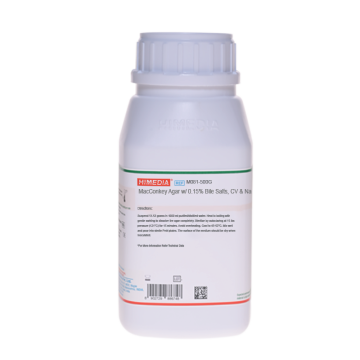
| Product Name | Medium 8. MacConkey Agar |
|---|---|
| SKU | MM081 |
| Product Type | Regular |
| Physical Form | Powder |
| Origin | Animal |
| Packaging type | HDPE |
| References | 1.MacConkey, 1900, The Lancet, ii:20. 2.MacConkey, 1905, J. Hyg., 5:333. 3.Speck M. (Ed.), 1985, Compendium of Methods for the Microbiological Examination of Foods, 2nd ed., APHA, Washington,D.C. 4.Greenberg A. E., Clesceri L. S. and Eaton A. D., (Eds.), 1992, Standard Methods for the Examination of Water andWastewater, 18th ed., APHA, Washington, D.C. 5.Marshall R. (Ed.), 1992, Standard Methods For the Examination of Dairy Products, 16th ed., APHA, Washington, D.C. 6.Indian Pharmacopoeia, 2010 Ministry of Health and Family Welfare, Govt. of India |
| Customized Product Available | No |