HiMedia Laboratories GmbH, Marie-Curie-Str. 3, 64683, Einhausen, Germany.

 Your enquiry has been submitted
Something problem with the server. Try again.
 Your enquiry has been submitted
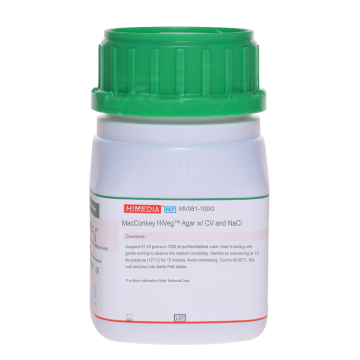
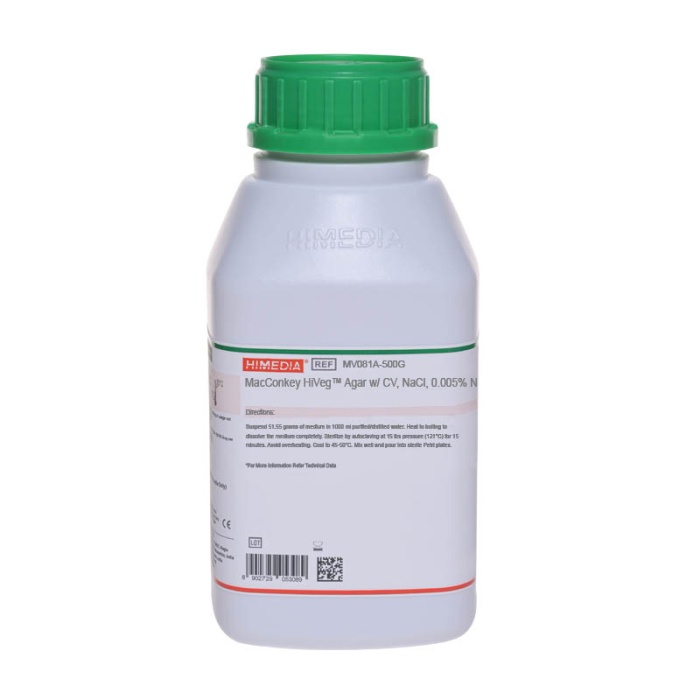
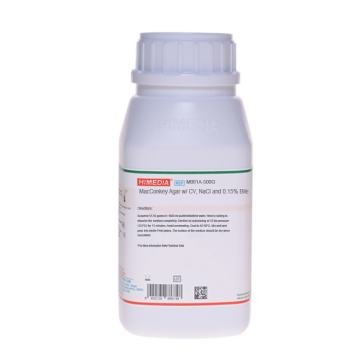
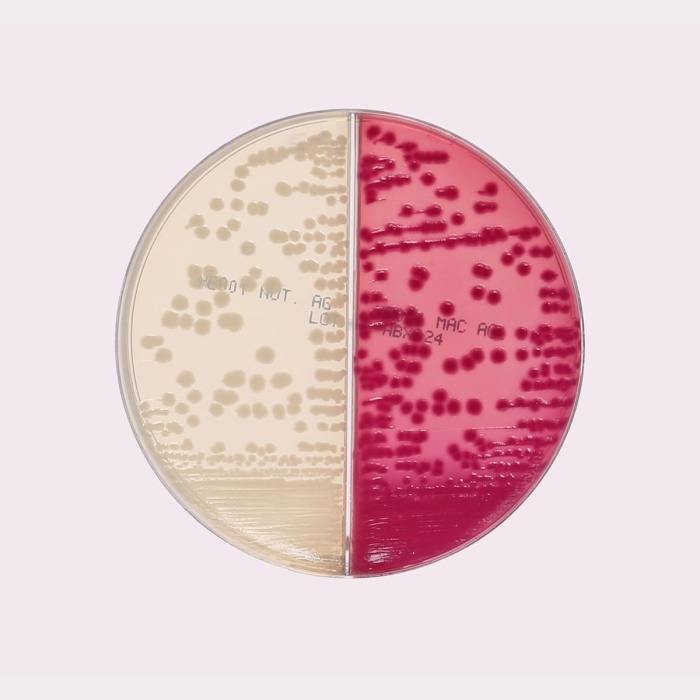
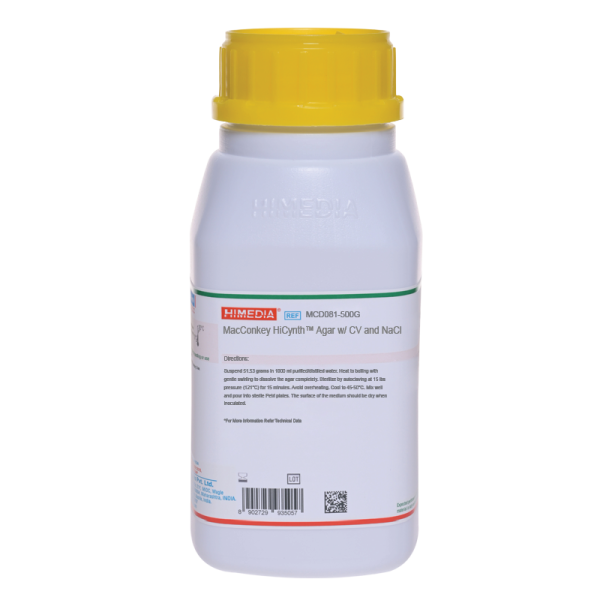
MacConkey HiCynth™ Agar w/ CV and NaCl is recommended for the selective isolation and differentiation of coliform organisms and other enteric pathogens from clinical, dairy, food, water, pharmaceutical industrial samples.
| Ingredients | Gms/Litre |
|---|---|
| HiCynth™ Peptone No.3* | 17.000 |
| HiCynth™ Peptone No.5* | 3.000 |
| Lactose | 10.000 |
| Synthetic detergent | 1.500 |
| Sodium chloride | 5.000 |
| Neutral red | 0.030 |
| Crystal violet | 0.001 |
| Agar | 15.000 |
| Final pH (at 25°C) | 7.1±0.2 |
**Formula adjusted, standardized to suit performance parameters
*Chemically defined peptones
Suspend 51.53 grams in 1000 ml distilled water. Heat to boiling with gentle swirling to dissolve the medium completely. Sterilize by autoclaving at 15 lbs pressure (121°C) for 15 minutes. Avoid overheating. Cool to 45-50°C. Mix well and pour into sterile Petri plates. The surface of the medium should be dry when inoculated.
MacConkey agars are slightly selective and differential plating media mainly used for the detection and isolation of gram-negative organisms from clinical (1), dairy (2), food (3,4), water (5), pharmaceutical (6) and industrial sources (7). It is also recommended for the selection and recovery of the Enterobacteriaceae and related enteric gram-negative bacilli. USP recommends this medium for use in the performance of Microbial Limit Tests (6). MacConkey HiCynth™ Agar w/ CV and NaCl is the modification of regular Macconkey agar prepared by replacing animal and vegetable peptones with chemically defined peptones to avoid BSE/TSE risks associated with animal peptones.
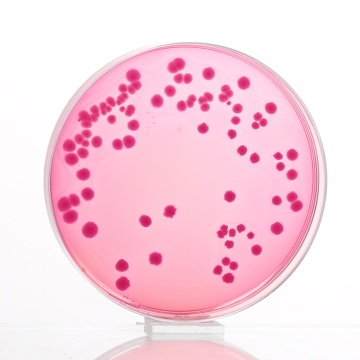
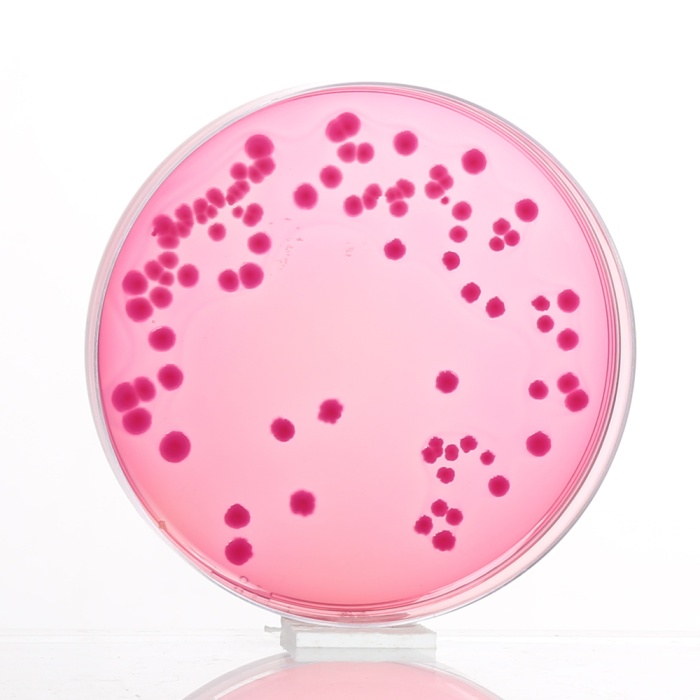
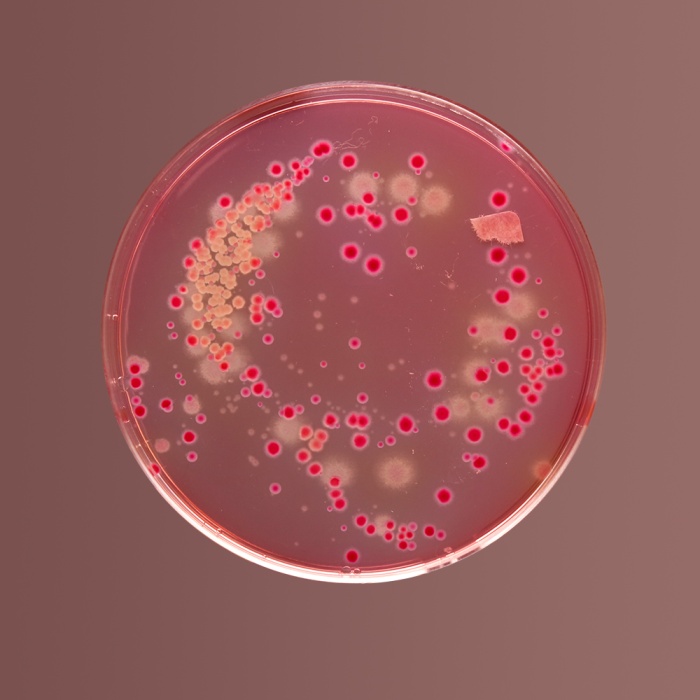
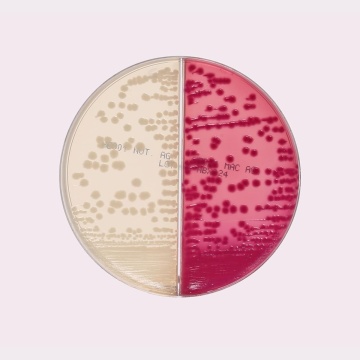
MacConkey Agar is the earliest selective and differential medium for cultivation of enteric microorganisms from a variety of clinical specimens (8,9). The original medium contains protein, bile salts, sodium chloride and two dyes. The selective action of this medium is attributed to crystal violet and synthetic detergent, which are inhibitory to most species of gram-positive bacteria. Gram-negative bacteria usually grow well on the medium and are differentiated by their ability to ferment lactose. Lactose-fermenting strains grow as red or pink colonies. The red colour is due to production of acid from lactose, absorption of neutral red and a subsequent colour change of the dye when the pH of medium falls below 6.8. Lactose non-fermenting strains, such as Shigella and Salmonella are colourless, transparent and typically do not alter appearance of the medium. HiCynth™ Peptone No.3 and HiCynth™ Peptone No.5 provide the necessary nitrogen compounds, carbon, long chain amino acids, vitamins and also some trace ingredients necessary for the growth of bacteria. Lactose is a fermentable carbohydrate, Sodium chloride maintains the osmotic equilibrium. Synthetic detergent and crystal violet are selective agents that inhibit growth of gram-positive organisms. Neutral red is the pH indicator dye.
Appearance
Light yellow to pink homogeneous free flowing powder
Gelling
Firm comparable with 1.5% Agar gel.
Colour and Clarity of prepared medium
Red with purplish tinge coloured clear to slightly opalescent gel forms in Petri plates.
Reaction of 5.15% w/v aqueous solution at 25°C. pH: 7.1±0.2
pH
6.90-7.30
Cultural response was observed after an incubation at 35-37°C for 18-24 hours. Recovery rate is considered as 100% for bacteria growth on Soybean Casein Digest Agar.
| Organism | Inoculum (CFU) | Growth | Recovery | Colour of colony |
|---|---|---|---|---|
| Cultural Response | ||||
| Escherichia coli ATCC 8739 | 50-100 | luxuriant | >=50% | pink-red |
| Escherichia coli ATCC 25922 | 50-100 | luxuriant | >=50% | pink to red |
| Escherichia coli NCTC 9002 | 50-100 | luxuriant | >=50% | pink to red |
| Enterobacter aerogenes ATCC 13048 | 50-100 | luxuriant | >=50% | pink to red |
| Enterococcus faecalis ATCC 29212 | 50 -100 | fair to good | 30-40% | colourless to pale pink |
| Salmonella Typhimurium ATCC 14028 | 50-100 | luxuriant | >=50% | colourless |
| Staphylococcus aureus ATCC 6538 | >=10³ | inhibited | 0% | |
| Staphylococcus aureus ATCC 25923 | >=10³ | inhibited | 0% | |
| Salmonella Enteritidis ATCC 13076 | 50-100 | luxuriant | >=50% | colourless |
| Salmonella Paratyphi A ATCC 9150 | 50-100 | luxuriant | >=50% | colourless |
| Salmonella Paratyphi B ATCC 8759 | 50-100 | luxuriant | >=50% | colourless |
| Salmonella Typhi ATCC 6539 | 50-100 | luxuriant | >=50% | colourless |
| Salmonella Abony NCTC 6017 | 50-100 | luxuriant | >=50% | colourless |
| Proteus vulgaris ATCC 13315 | 50-100 | luxuriant | >=50% | colourless |
| Shigella flexneri ATCC 12022 | 50-100 | fair to good | 30-40% | colourless |
| Staphylococcus epidermidis ATCC 12228 | >=10³ | inhibited | 0% | |
| Corynebacterium diphtheriae type gravis | >=10³ | inhibited | 0% | |
Store below 30°C in tightly closed container and the prepared medium at 2 - 8°C. Use before expiry date on the label.
| Product Name | MacConkey HiCynth™ Agar w/, CV and NaCl |
|---|---|
| SKU | MCD081 |
| Product Type | HiCynth™ |
| Physical Form | Powder |
| Origin | Chemically defined (HiCynth™), Lactose |
| Packaging type | HDPE |
| References | 1.Murray P. R, Baron E, J., Jorgensen J. H., Pfaller M. A., Yolken R. H., (Eds.), 8th Ed., 2003, Manual of Clinical Microbiology,ASM, Washington, D.C. 2.Wehr H. M. and Frank J. H., 2004, Standard Methods for the Microbiological Examination of Dairy Products, 17th Ed.,APHA Inc., Washington, D.C. 3.Salfinger Y., and Tortorello M.L. Fifth (Ed.), 2015, Compendium of Methods for the Microbiological Examination ofFoods, 5th Ed., American Public Health Association, Washington, D.C. 4.FDA Bacteriological Analytical Manual, 2005, 18th Ed., AOAC, Washington, D.C. 5.Baird R.B., Eaton A.D., and Rice E.W., (Eds.), 2015, Standard Methods for the Examination of Water andWastewater, 23rd ed., APHA, Washington, D.C. 6.The United States Pharmacopoeia, 2018, The United States Pharmacopeial Convention, Rockville, M.D. 7.Williams, (Ed.), 2005, Official Methods of Analysis of the Association of Official Analytical Chemists, 19th Ed., AOAC,Washington, D.C8.Medrek T. F and Barnes Ella M., 1962, J. Appl. Bacteriol., 25(2),159-1689.Barnes Ella M. and Shrimpton D. H., 1957, J. Appl. Bacteriol., 20(2),273-285.10.Thornley Margaret J., 1957, J. Appl. Bacteriol., 20(2), 273-285. 11.Eddy B. P., 1960, J. Appl. Bacteriol., 23(2).216-249. 12.MacConkey A., 1905, J. Hyg., 5:333. 13.MacConkey A., 1900, The Lancet, ii:20. 14.British Pharmacopoeia, 2016, The Stationery office British Pharmacopoeia.1 5.Isenberg, H.D. Clinical Microbiology Procedures Handb0ook. 2nd Edition |
| Customized Product Available | No |