Plot No. C40, Road No. 21Y, MIDC, Wagle Industrial Estate, Thane(W)-400604, MH, India


 Your enquiry has been submitted
Something problem with the server. Try again.
 Your enquiry has been submitted
Recommended as a diluent for carrying out microbial limit testing by harmonized methodology of pharmaceutical products in accordance with USP/EP/BP/JP/IP.
| Ingredients | g/L |
|---|---|
| Potassium dihydrogen phosphate | 3.600 |
| Disodium hydrogen phosphate dihydrate | 7.200 |
| Sodium chloride | 4.300 |
| HMC Peptone # | 1.000 |
| Final pH (at 25°C) | 7.00 |
**Formula adjusted, standardized to suit performance parameters
# Peptone (meat or casein)
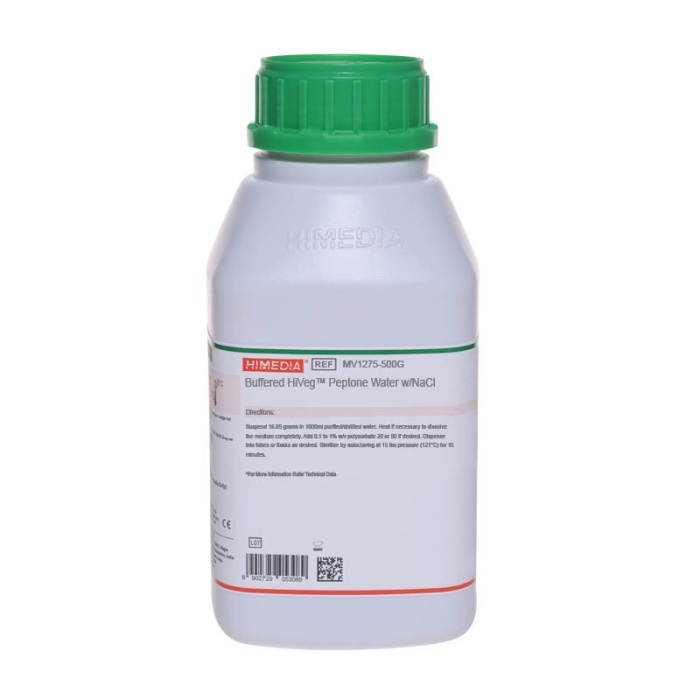
Suspend 14.64 grams (the equivalent weight of dehydrated medium per liter) in 1000 ml purified /distilled water. Heat if necessary to dissolve the medium completely. For preparation of non-fatty products insoluble in water, add 0.1% w/v Polysorbate 80 to assist the suspension of poorly wettable substances. Dispense in tubes or flasks or as desired and sterilize by autoclaving at 15 lbs pressure 121°C for 15 minutes or as per validated cycle.
The composition of this medium is in accordance with the harmonized methodology of USP/EP/BP/JP/IP (1-5). This medium is recommended for preparation of stable test strain suspension employed for validating the microbiological testing procedures of non-sterile products. The standardized stable suspensions are used so that the suitability of this test to detect microorganism in presence of product can be established. Non-fatty products insoluble in water and water-soluble products are diluted/dissolved using this solution.
HMC Peptone serves as nutrient source and maintains the cell viability. Phosphates in the medium act as good buffering agents. Sodium chloride maintains the osmotic balance and cell integrity. Polysorbates reduce surface tension and also inactivate phenolic compound, if present in the test sample.
Preparation of test strain is recommended in Buffered Sodium chloride-Peptone solution pH 7.0, Granulated (GMH1275) at 30-35°C wherein there is no multiplication of organisms or there is no decrease in count for upto 4 hours.
Pharmaceutical samples
For pharmaceutical samples follow appropriate techniques for handling specimens as per established guidelines (1-5).
After use, contaminated materials must be sterilized by autoclaving before discarding.
Read the label before opening the container. Wear protective gloves/protective clothing/eye protection/ face protection. Follow good microbiological lab practices while handling specimens and culture. Standard precautions as per established guidelines should be followed while handling specimens. Safety guidelines may be referred in individual safety data sheets
Performance of the medium is expected when used as per the direction on the label within the expiry periodwhen stored at recommended temperature.
Appearance
White to cream coloured granular medium
Colour and Clarity of prepared medium
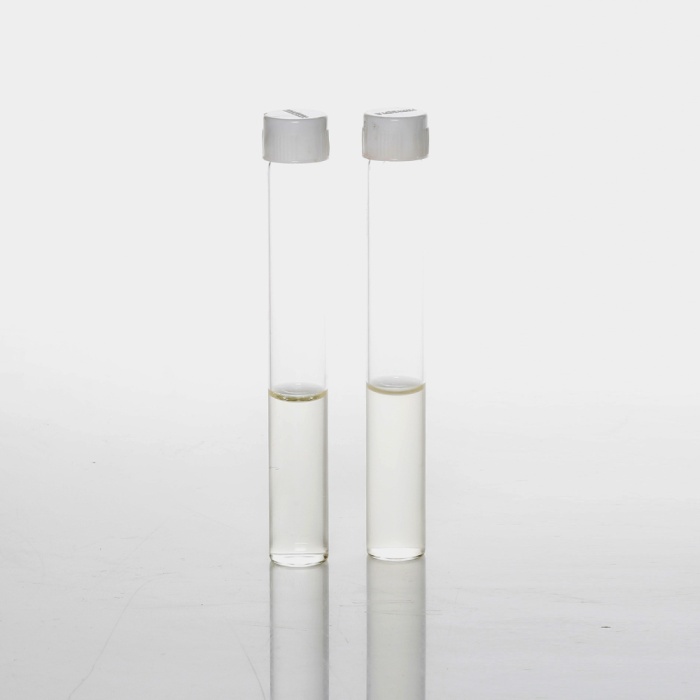
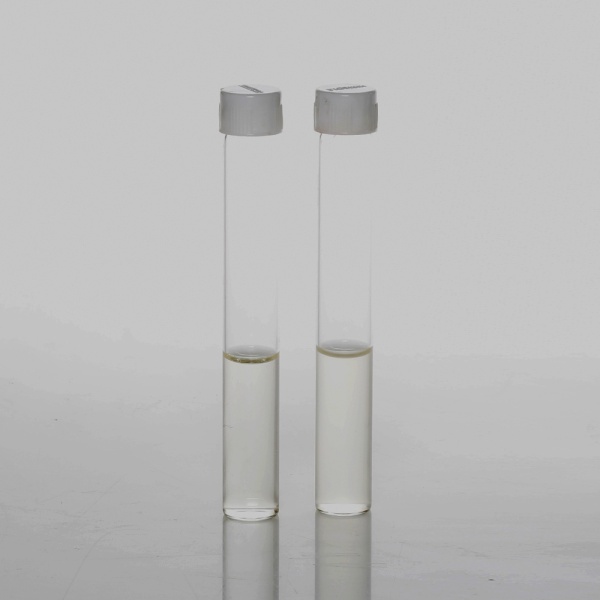
Colourless to pale yellow clear solution w/o any precipitate.
pH
7.00
Growth Promotion Test
Growth Promotion is carried out in accordance with the harmonized method of ICH(USP/EP/BP/JP/IP).
Cultural response
Cultural characteristics observed after recovery on Soybean Casein Digest Agar after an incubation at 30-35°C for 18-24 hours for bacteria and Sabouraud Dextrose Agar at 30-35°C for 24-48 hours.
| Organism | Inoculum (CFU) | Recovery within 2 hours of incubation | Recovery within 4 hours of incubation | Recovery within 24 hours of incubation |
|---|---|---|---|---|
| Preparation of test strain | ||||
| Escherichia coli ATCC 8739 (00012*) | 50-100 | no decrease in colony count | no decrease in colony count | no decrease in colony count (stored at 2-8°C) |
| Escherichia coli ATCC 25922 (00013*) | 50-100 | no decrease in colony count | no decrease in colony count | no decrease in colony count (stored at 2-8°C) |
| Staphylococcus aureus subsp. aureus ATCC 6538 (00032*) | 50-100 | no decrease in colony count | no decrease in colony count | no decrease in colony count (stored at 2-8°C) |
| Staphylococcus aureus subsp. aureus ATCC 25923 (00034*) | 50-100 | no decrease in colony count | no decrease in colony count | no decrease in colony count (stored at 2-8°C) |
| ^Pseudomonas paraaeruginosa ATCC 9027 (00026*) | 50-100 | no decrease in colony count | no decrease in colony count | no decrease in colony count (stored at 2-8°C) |
| Pseudomonas aeruginosa ATCC 27853 (00025*) | 50-100 | no decrease in colony count | no decrease in colony count | no decrease in colony count (stored at 2-8°C) |
| Salmonella Typhimurium ATCC 14028 (00031*) | 50-100 | no decrease in colony count | no decrease in colony count | no decrease in colony count (stored at 2-8°C) |
| Salmonella Abony NCTC 6017 (00029*) | 50-100 | no decrease in colony count | no decrease in colony count | no decrease in colony count (stored at 2-8°C) |
| **Bacillus spizizennii ATCC 6633 (00003*) | 50-100 | no decrease in colony count | no decrease in colony count | no decrease in colony count (stored at 2-8°C) |
| $ Kokuria rhizophila ATCC 9341 | 50-100 | no decrease in colony count | no decrease in colony count | no decrease in colony count (stored at 2-8°C) |
| Candida albicans ATCC 10231 (00054*) | 50-100 | no decrease in colony count | no decrease in colony count | no decrease in colony count (stored at 2-8°C) |
| Candida albicans ATCC 2091 (00055*) | 50-100 | no decrease in colony count | no decrease in colony count | no decrease in colony count (stored at 2-8°C) |
Key: (*) Corresponding WDCM Numbers
**Formerly known as Bacillus subtilis subsp. spizizenii
^ Formerly known as Pseudomonas aeruginosa
$ Formerly known as Micrococcus luteus
Store between 10-30°C in a tightly closed container and the prepared medium at 20-30°C. Use before expiry date on the label. On opening, product should be properly stored dry, after tightly capping the bottle inorder to prevent lump formation due to the hygroscopic nature of the product. Improper storage of the product may lead to lump formation. Store in dry ventilated area protected from extremes of temperature and sources of ignition Seal the container tightly after use. Product performance is best if used within stated expiry period.
User must ensure safe disposal by autoclaving and/or incineration of used or unusable preparations of this product. Follow established laboratory procedures in disposing of infectious materials must be decontaminated and disposed of in accordance with current laboratory techniques (6,7).
| Product Name | Buffered Sodium Chloride-Peptone Solution, pH 7.0, Granulated |
|---|---|
| SKU | GMH1275 |
| Product Type | Granulated |
| Physical Form | Granular |
| Origin | Animal |
| Packaging type | HDPE |
| References | 1. Edel and Kampelmacher, 1973, Bull. W.H.O., 48:167. |
| Customized Product Available | No |