Plot No. C40, Road No. 21Y, MIDC, Wagle Industrial Estate, Thane(W)-400604, MH, India

 Your enquiry has been submitted
Something problem with the server. Try again.

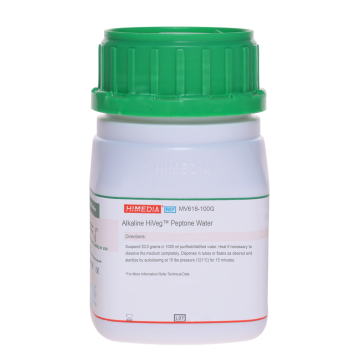
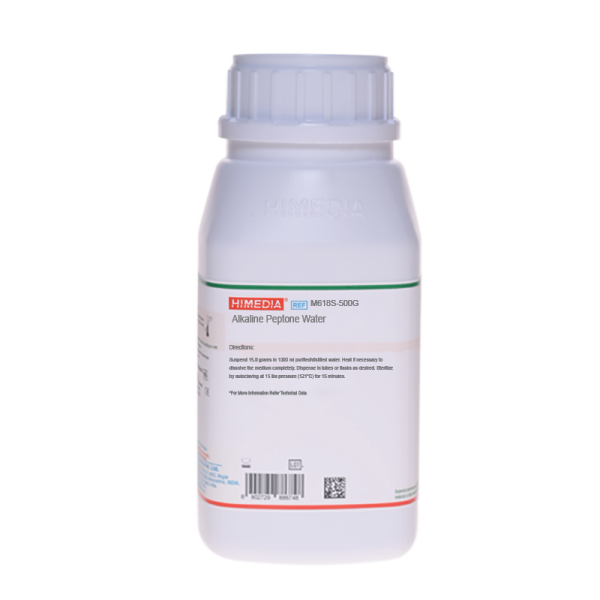
Alkaline Peptone Water is recommended for enrichment of Vibrio species. It is in accordance with BIS specifications IS 5887 (Part - V) 1976, reaffirmed 1986.
| Ingredients | Gms / Litre |
|---|---|
| Peptic digest of animal tissue | 10.000 |
| Sodium chloride | 5.000 |
| Final pH (at 25°C) | 8.2±0.2 |
Formula adjusted, standardized to suit performance parameters
Suspend 15 grams in 1000 ml distilled water. Heat if necessary to dissolve the medium completely. Dispense as desired and sterilize by autoclaving at 15 lbs pressure (121°C) for 15 minutes.
Alkaline Peptone Water is recommended by APHA (1) for enrichment of Vibrio species from sea foods and infectious materials and other clinical specimens such as faeces (2). Present formulation is prepared as recommended by BIS for isolation, identification and enumeration of Vibrio cholerae and Vibrio parahaemolyticus (3).A slight modification is recently approved by ISO Committee (4) for detection of Vibrio species.
Add 25 gms of food sample to 200 ml of Alkaline peptone water and incubate for upto 18-20 hours at 37°C. Prolonged incubation will cause the suppressed contaminating organisms to develop (5).
Appearance
Cream to yellow coloured homogeneous free flowing powder
Colour and Clarity of prepared medium
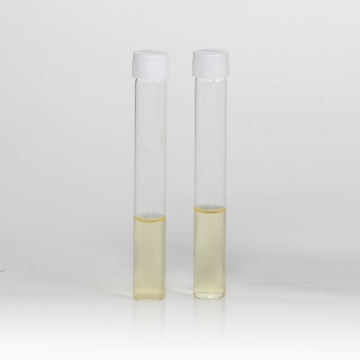
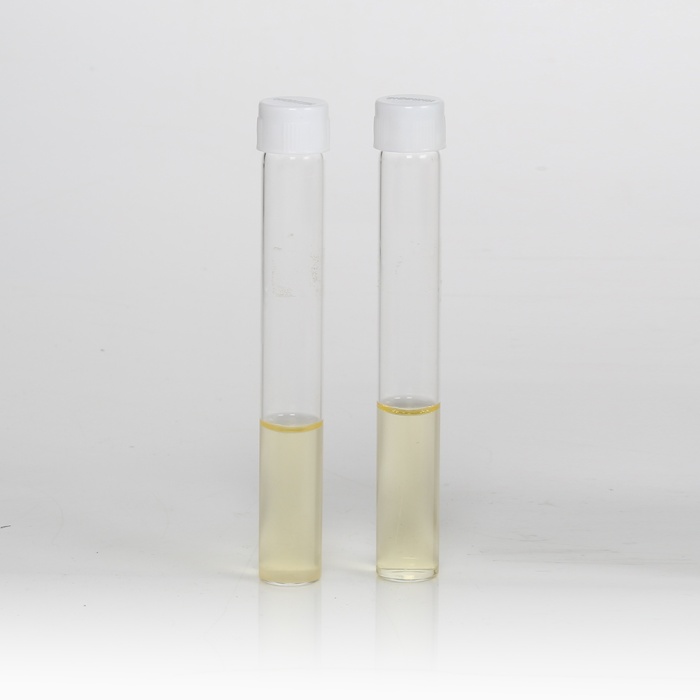
Light yellow coloured clear solution without any precipitate.
Reaction
Reaction of 1.5% w/v aqueous solution at 25°C. pH : 8.2±0.2
pH
8.00-8.40
M618S: Cultural characteristics observed after an incubation at 35-37°C for 18-24 hours.
| Organism | Inoculum (CFU) | Growth |
|---|---|---|
| Vibrio cholerae ATCC 15748 | 50-100 | luxuriant |
| Vibrio parahaemolyticus ATCC 17802 | 50-100 | luxuriant |
Store below 30°C in tightly closed container and prepared medium at 2-8°C. Use before expiry date on the label.
| Product Name | Alkaline Peptone Water |
|---|---|
| SKU | M618S |
| Product Type | Regular |
| Physical Form | Powder |
| Origin | Animal |
| Packaging type | HDPE |
| References | 1. Gilligan, Janda, Karmali and Miller, 1992, Cumitech 12A, Laboratory Diagnosis of Bacterial Diarrhea, Coord. Ed., Nolte,American Society for Microbiology, Washington, D.C. 2.Forbes B. A., Sahm A. S., and Weissfeld D. F., Bailey & Scotts Diagnostic Microbiology, 10th Ed., 1998, Mosby, Inc.,St. Louis, Mo. 3.Isenberg, (Ed.), 1992, Clinical Microbiology Procedures Handbook, Vol. I, American Society for Microbiology, Washington,D.C. 4.Salfinger Y., and Tortorello M.L. Fifth (Ed.), 2015, Compendium of Methods for the Microbiological Examination ofFoods, 5th Ed., American Public Health Association, Washington, D.C. 5.Cruikshank R., 1968, Medical Microbiol., 11th Ed., Livingstone Ltd., London 6.Finegold S. M. and Martin W. J., 1982, W. J. Bailey and Scotts Diagnostic Microbiol, 6th Ed., C.V. Mosby Co., St. Louis,p. 242 8.Jorgensen,J.H., Pfaller , M.A., Carroll, K.C., Funke, G., Landry, M.L., Richter, S.S and Warnock., D.W. (2015)Manual of Clinical Microbiology, 11th Edition. Vol. 1. |