HiMedia Laboratories GmbH, Marie-Curie-Str. 3, 64683, Einhausen, Germany.


 Your enquiry has been submitted
Something problem with the server. Try again.
 Your enquiry has been submitted
Recommended for enrichment of Vibrio parahaemolyticus and marine isolates from food.
| Ingredients | g/L |
|---|---|
| Part A | |
| HiVeg® peptone | 10.000 |
| HiVeg® extract | 3.000 |
| Sodium chloride | 30.000 |
| Dextrose (Glucose) | 5.000 |
| Methyl violet | 0.002 |
| Part B | |
| Teepol | 4.000 ml |
| Final pH (at 25°C) | 8.8±0.2 |
Formula adjusted, standardized to suit performance parameters
Suspend 48.0 grams of Part A in 1000 ml purified/distilled water containing 4.0 ml of Part B. Heat gently to dissolve the medium completely. Dispense in tubes or flasks as desired. Sterilize by autoclaving at 15 lbs pressure (121°C) for 15 minutes.
Glucose Salt Teepol Broth is a special media used to enrich Vibrio parahaemolyticus from sea foods (1) and also used to enumerate the bacteria by MPN technique (2). V.parahaemolyticus is a gram-negative marine bacterium, which causes seafood-borne gastroenteritis in humans (3). Fujino and co-workers were the first to isolate Vibrio parahaemolyticus as a causative agent of food-borne gastroenteritis, following a large outbreak in Japan (4). Glucose Salt Teepol HiVeg® Broth (Twin pack) is prepared by completely replacing animal based peptone with vegetable peptones to avoid BSE/TSE risks associate with animal peptones. HiVeg® peptone and HiVeg® extract provide essential nitrogenous nutrients and the high percentage of sodium chloride (3%) helps for the better enrichment of halophilic V. parahaemolyticus. Glucose is utilized while teepol inhibits the growth of gram-positive organisms. The test sample should be held under moderate refrigeration (about 7 to 10°C) and should be analyzed as soon as possible, after collection as possible. This maximizes the survival and recovery of Vibrio's and reduces the tendency for overgrowth by indigenous marine microflora. Weigh 50 gram of seafood sample into a blender. Add 450 ml of PBS (Phosphate Buffer Saline) dilution water and blend for 1 min at 8000 rpm. This constitutes the 1:10 dilution. Prepare 1:100, 1:1000, 1:10000 dilutions or higher if necessary in PBS. Inoculate 3 x 10 ml portion of the 1:10 dilution into 3 tubes containing 10 ml of enrichment broth i.e. Glucose Salt Teepol Broth in 2x concentration. This represents the 1-gram portion. Similarly inoculate 10 ml of single strength enrichment broth as above. If high numbers of V. parahaemolyticus are expected, the examination may start at the 1:10 dilution of the product (2). After overnight incubation of Glucose Salt Teepol Broth at 35± 2°C, a loopful of culture from top 1 cm of the broth showing growth is streaked onto TCBS HiVeg® Agar (MV189). After overnight incubation at 35± 2°C, V. parahaemolyticus colonies on TCBS HiVeg® Agar appear as round, green or bluish measuring 2.3 mm in diameter, while V. alginolyticus colonies are larger and yellow coloured. These colonies are further identified by biochemical characterization. For biochemical tests in identification of V. parahaemolyticus, V. cholera, and V.vulnificus, appropriate positive control organisms have to be inoculated. When the blue green colonies are finally identified as V. parahaemolyticus, refer to the original positive dilution in the enrichment broth and apply the 3 tube MPN tables for final enumeration of the organism.
Food samples
Weigh 50 gram of seafood sample into a blender. Add 450 ml of PBS (Phosphate Buffer Saline) dilution water and blend for 1 min at 8000 rpm. This constitutes the 1:10 dilution. Prepare 1:100, 1:1000, 1:10000 dilutions or higher if necessary in PBS. Inoculate 3 x 10 ml portion of the 1:10 dilution into 3 tubes containing 10 ml of enrichment broth i.e. Glucose Salt Teepol HiVeg® Broth in 2x concentration. This represents the 1-gram portion. Similarly inoculate 10 ml of single strength enrichment broth as above. If high numbers of V.parahaemolyticus are expected, the examination may start at the 1:10 dilution of the product (5). After overnight incubation of Glucose Salt Teepol Broth at 35± 2°C, a loopful of culture from top 1 cm of the broth showing growth is streaked onto TCBS HiVeg® Agar (MV189). After overnight incubation at 35± 2°C, V.parahaemolyticus colonies on TCBS HiVeg® Agar appear as round, green or bluish measuring 2.3 mm in diameter, while V.alginolyticus colonies are larger and yellow coloured. These colonies are further identified by biochemical characterization.
Read the label before opening the container. Wear protective gloves/protective clothing/eye protection/ face protection. Follow good microbiological lab practices while handling specimens and culture. Standard precautions as per established guidelines should be followed while handling clinical specimens. Safety guidelines may be referred in individual safety data sheets.
Performance of the medium is expected when used as per the direction on the label within the expiry period when stored at recommended temperature.
Appearance
Part A: Cream to yellow homogeneous free flowing powder Part B: Colourless viscous liquid
Colour and Clarity of prepared medium
Yellow coloured, clear solution with a very slight precipitate.
Reaction
Reaction of 4.8% w/v aqueous solution with 0.4% Teepol at 25°C. pH: 8.8±0.2
pH
8.60-9.00
Cultural Response
Cultural characteristics observed after an incubation at 35-37°C for 18-24 hours.
| Organism | Inoculum (CFU) | Growth |
|---|---|---|
| Vibrio alginolyticus ATCC 17749 | 50-100 | good-luxuriant |
| Vibrio parahaemolyticus ATCC 17802 (00037*) | 50-100 | good-luxuriant |
Key: *Corresponding WDCM numbers.
Store between 10-30°C in a tightly closed container and the prepared medium at 15-25°C. Use before expiry date on the label. On opening, product should be properly stored dry, after tightly capping the bottle in order to prevent lump formation due to the hygroscopic nature of the product. Improper storage of the product may lead to lump formation. Store in dry ventilated area protected from extremes of temperature and sources of ignition. Seal the container tightly after use. Product performance is best if used within stated expiry period.
User must ensure safe disposal by autoclaving and/or incineration of used or unusable preparations of this product. Follow established laboratory procedures in disposing of infectious materials and material that comes into contact with sample must be decontaminated and disposed of in accordance with current laboratory techniques (6,7).
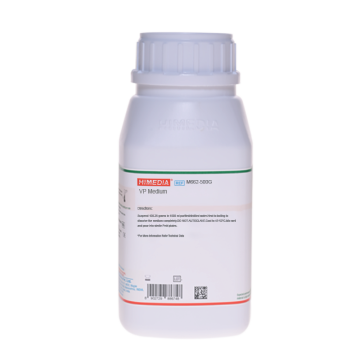
| Product Name | Glucose Salt Teepol HiVeg® Broth (Twin pack) |
|---|---|
| SKU | MV621 |
| Product Type | HiVeg™ |
| Physical Form | Powder |
| Origin | Animal Free (Veg) |
| Packaging type | HDPE |
| References | 1.Vanderzant C. and Splittstoesser D. F., (Eds.), 1992, Compendium of Methods for the Microbiological Examination of Foods,3rd Ed., APHA, Washington, D.C. 2.Thompson F. L., T. Iida and Swings J., 2004, Biodiversity of Vibrios, Microbiol. Mol. Biol. Rev., 68: 403-431. 3.Fujino T., Okuno Y., Nakada D., Aoyama A., Fukai K., Mukai T. and Ueho T., 1953, Med. J. Osaka Univ., 4:299-304. 4.Akiyama S., Takizawa K., and Obara Y., 1964, Ann. Rep. Kanagawa Pref. Inst. Public Health, 13:7 |
| Customized Product Available | No |