HiMedia Laboratories GmbH, Marie-Curie-Str. 3, 64683, Einhausen, Germany.

 Your enquiry has been submitted
Something problem with the server. Try again.
 Your enquiry has been submitted
Recommended as a selective enrichment medium for the Salmonellae species from the food and animal feeding stuffs.
| Ingredients | Gms / Litre |
|---|---|
| HiCynth™ Peptone No.4* | 4.500 |
| Sodium chloride | 8.000 |
| Potassium dihydrogen phosphate | 0.600 |
| Dipotassium hydrogen phosphate | 0.400 |
| Magnesium chloride hexahydrate | 29.000 |
| Malachite green | 0.036 |
| Final pH (at 25°C) | 5.2±0.2 |
**Formula adjusted, standardized to suit performance parameters
* Chemically defined peptone
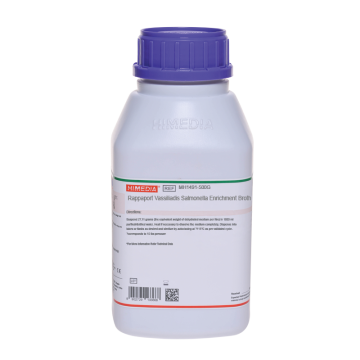
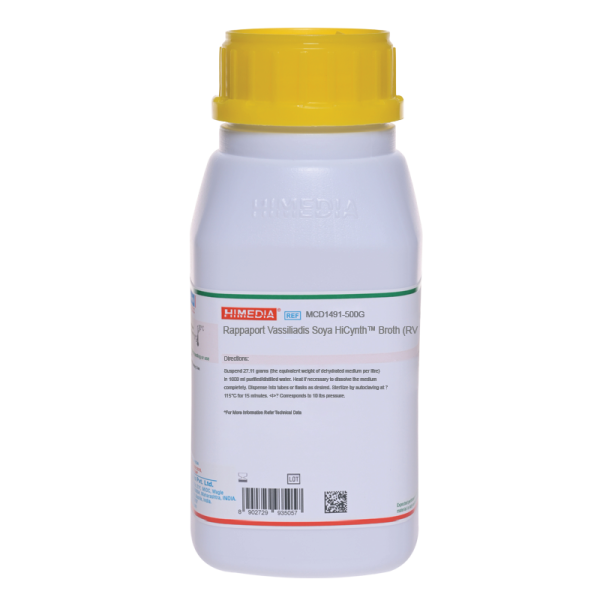
Suspend 27.11 grams (the equivalent weight of dehydrated medium per litre) in 1000 ml purified / distilled water. Heat if necessary to dissolve the medium completely. Dispense into tubes or flasks as desired. Sterilize by autoclaving at A115°C for 15 mins. Note: A Corresponds to 10 lbs pressure.
Rappaport Vassiliadis Soya Broth is designed according to the revised formulation by Van Schothorst et al (1) and is recommended for the selective enrichment of Salmonellae from pharmaceutical products. Rappaport Vassiliadis Soya HiCynth™ Broth is prepared by replacing animal and vegetable peptones with chemically defined peptones to avoid BSE/TSE risks associated with animal peptones. This medium can also be used in direct enrichment of samples containing low inoculum. Present medium is a modification of the Rappaport Vassiliadis Enrichment Broth described by Van Schothorst and Renauld (2). Addition of magnesium chloride to the medium was reported by Peterz et al (3). Salmonella species can be isolated from human faeces without pre-enrichment by using this medium. Salmonella generally survive at little high osmotic pressure, grow at slightly low pH and are resistant to malachite green compared to other bacteria. These characteristics are exploited in this medium for selective enrichment of Salmonella.
Magnesium chloride present in the medium raises the osmotic pressure. HiCynth™ Peptone No. 4 provides carbon, nitrogen compounds, vitamins and other growth nutrients to enhance the growth of Salmonella (5). Phosphate buffers the medium to maintain constant pH. Sodium chloride maintains the osmotic balance. Malachite green inhibits many gram-positive bacteria, while selectively enrich Salmonella. The relatively lower concentration of nutrition, also aids selective enrichment of Salmonella. This medium was reported to be superior to Salmonella selective medium like Tetrathionate Broth and Selenite enrichment broth and to Tetrathionate-Brilliant Green Broth for the detection of Salmonella in milk samples. The enriched culture of Rappaport Vasiliadis Soya HiCynth™ Broth (MCD1491) can be further subcultured and isolated on Brilliant Green HiCynth™ Agar (MCD016) or Deoxycholate Citrate HiCynth™ Agar (MCD065), Xylose Lysine Deoxycholate HiCynth™ Agar (MCD031).
Food samples and amimal feeding stuffs.
For food samples, follow appropriate techniques for sample collection and processing as per guidelines (5).
After use, contaminated materials must be sterilized by autoclaving before discarding.
Read the label before opening the container. Wear protective gloves/protective clothing/eye protection/face protection. Follow good microbiological lab practices while handling specimens and culture. Standard precautions as per established guidelines should be followed while handling specimens. Safety guidelines may be referred in individual safety data sheets.
Performance of the medium is expected when used as per the direction on the label within the expiry period when stored at recommended temperature.
Appearance
Light yellow to light blue homogeneous free flowing powder
Colour and Clarity of prepared medium
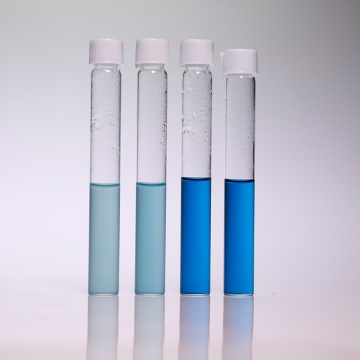
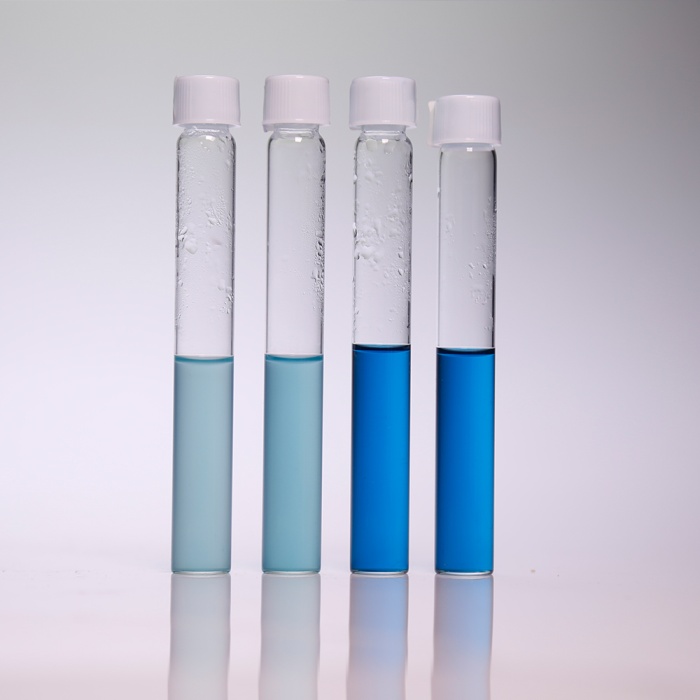
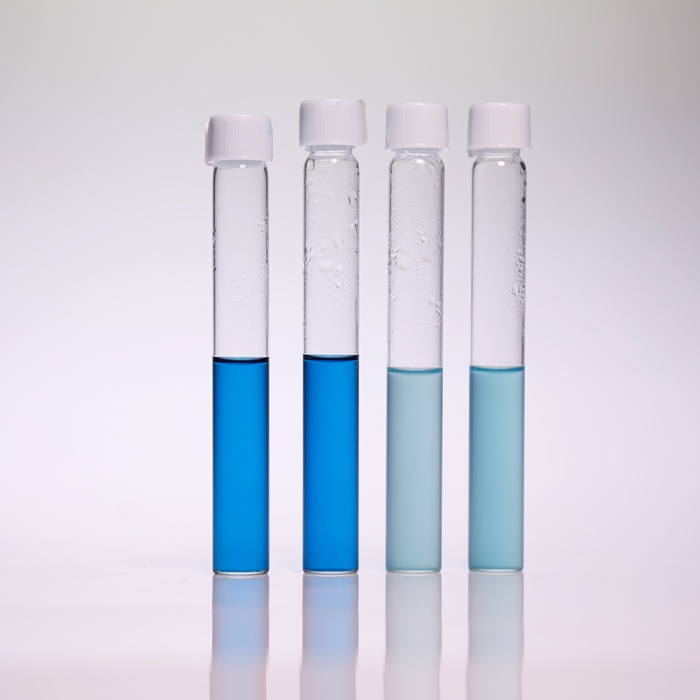
Greenish blue clear to slightly opalescent with a slight precipitate.
Reaction
Reaction of 2.77% w/v aqueous solution at 25°C. pH : 5.2±0.2
pH
5.00-5.40
Cultural response was observed after an incubation at 30-35°C for 18-24 hours Recovery is carried out using Xylose Lysine Deoxycholate Agar (MCD031) after enrichment.
E.coli + S.Typhimurium (mixed culture)
| Organism | Inoculum (CFU) | Growth | Recovery | Colour of colony |
|---|---|---|---|---|
| E.coli | 50-100 | none-poor | <=10% | yellow |
| S. Typhimurium | 50-100 | luxuriant | >=50% | red with black centers |
| Staphylococcus aureus subsp. aureus ATCC 25923 (00034*) | >=104 | inhibited | 0% | |
| Enterococcus faecalis ATCC 29212 (00087*) | >=104 | inhibited | 0% | |
| Salmonella Abony NCTC 6017 (00029*) | 50-100 | luxuriant | >=70% | red with black centers |
| Salmonella Typhimurium subsp. aureus ATCC 14028 (00031*) | 50-100 | luxuriant | >=70% | red with black centers |
| Staphylococcus aureus ATCC 6538 (00032*) | >=104 | inhibited | 0% | |
| Escherichia coli ATCC 25922 (00013*) | 50-100 | none-poor | 0-10 | yellow |
| Salmonella Enteritidis ATCC 13076 (00030*) | 50-100 | luxuriant | >=70% | red with black centre |
| Escherichia coli ATCC 8739 (00012*) | 50-100 | none-poor | <=10% | yellow |
| Salmonella Paratyphi B ATCC 8759 | 50-100 | luxuriant | >=70% | red with black centre |
Key: (*) Corresponding WDCM numbers.
Store below 10-30°C in a tightly closed container and the prepared medium at 15-30°C. Use before expiry date on the label. On opening, product should be properly stored dry, after tightly capping the bottle inorder to prevent lump formation due to the hygroscopic nature of the product. Improper storage of the product may lead to lump formation. Store in dry ventilated area protected from extremes of temperature and sources of ignition Seal the container tightly after use. Product performance is best if used within stated expiry period.
User must ensure safe disposal by autoclaving and/or incineration of used or unusable preparations of this product. Follow established laboratory procedures in disposing of infectious materials and material that comes into contact with sample must be decontaminated and disposed of in accordance with current laboratory techniques (6,7).
| Product Name | Rappaport Vassiliadis Soya HiCynth™ Broth (RVS HiCynth™ Broth) |
|---|---|
| SKU | MCD1491 |
| Product Type | HiCynth™ |
| Physical Form | Powder |
| Origin | Chemically defined (HiCynth™) |
| Packaging type | HDPE |
| References | 1. Isenberg, H.D. Clinical Microbiology Procedures Handbook 2nd Edition. |
| Customized Product Available | No |