Plot No. C40, Road No. 21Y, MIDC, Wagle Industrial Estate, Thane(W)-400604, MH, India


 Your enquiry has been submitted
Something problem with the server. Try again.
 Your enquiry has been submitted
| Ingredients | g/L |
|---|---|
| Enzymatic digest of animal tissues | 7.000 |
| D-Glucose | 5.000 |
| Potassium phosphate dibasic(K2HPO4) | 5.000 |
| pH after sterilization at 25°C | 6.9±0.2 |
| Ingredients | g/L |
|---|---|
| Peptone# | 7.000 |
| Dextrose | 5.000 |
| Dipotassium phosphate | 5.000 |
| Final pH (at 25°C) | 6.9±0.2 |
**Formula adjusted, standardized to suit performance parameters
# Equivalent to enzymatic digest of animal tissues
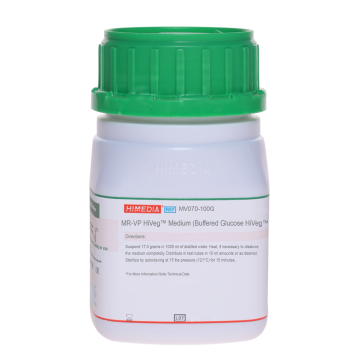
Suspend 17.0 grams in 1000 ml of distilled water. Heat if necessary to dissolve the medium completely. Distribute in test tubes in 10 ml amounts and sterilize by autoclaving at 15 lbs pressure (121°C) for 15 minutes.
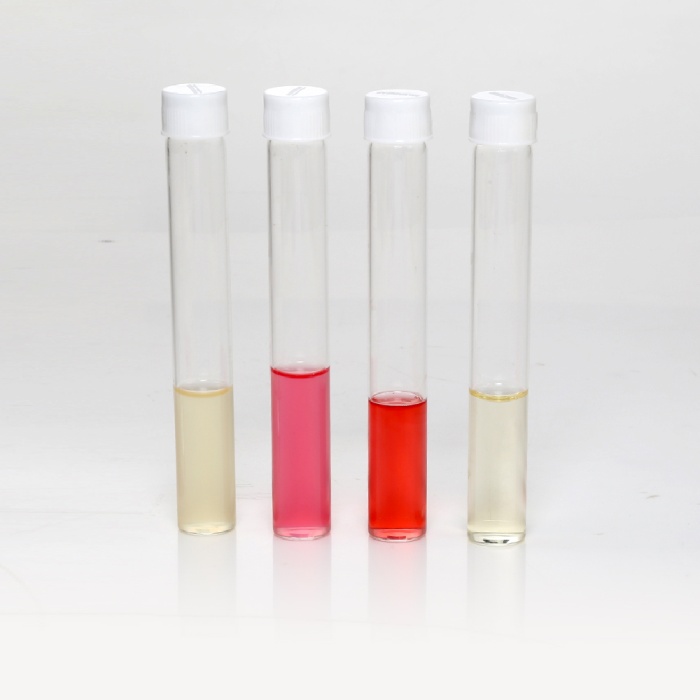
Methyl Red and Voges-Proskauer test are among the two various tests used in the biochemical identification of bacterial species. These tests were originally studied by Voges, Proskauer (1) and subsequently by Clark and Lubs (2) to differentiate between members of the coli- aerogens group. Both the tests are based on the detection of specific Breakdown products of carbohydrate metabolism. All members of Enterobacteriaceae are, by definition, glucose fermenters. In MR-VP Broth, after 18-24 hours of incubation, fermentation produces acidic metabolic byproducts. Therefore initially all enterics will give a positive MR reaction if tested (3,4,5). However, after further incubation, required by the test procedure (2-5 days), MR positive organisms continue toproduce acids, resulting in a low pH (acidic) that overcomes the phosphate buffering system and maintains an acidic environment in the medium (pH 4.2 or less). MR-negative organisms further metabolize the initial fermentation products by decarboxylation to produce neutral acetyl methylcarbinol (acetoin), which results in decreased acidity in the medium and raises the pH towards neutrality (pH 6.0 or above) (6). In the presence of atmospheric oxygen and alkali, the neutral end products, acetoin and 2, 3-butanediol, are oxidized to diacetyl, which react with creatine to produce a red colour. MR-VP Broth (M070I/GM070I) has also been recommended by the ISO committee (7) for biochemical detection of the Cronobacter spp. This medium is also recommended by FDA BAM for biochemical testing of Salmonella (8) and E.coli and coliform bacteria (9). All typical Salmonella species show Methyl red positive reaction and Voges-Proskauer test negative reaction. The Methyl Red (MR) test is performed after 5 days of incubation at 30°C (10). The Voges-Proskauer test (VP) cultures are incubated at 30°C for 24-48 hours (11). Various test procedures have been suggested for performing the VP test by Werkman (12), OMeara (13) Levine, et al (14) and Voughn et al (10).
Werkmans Test (12): Add 2 drops of a 2% solution of ferric chloride to 50 ml culture and 5 ml of 10% sodium hydroxide. Shake the tube to mix well. Stable copper colour developing in a few minutes is positive reaction.
OMeara Test (13): Add 25 mg of solid creatine to 5 ml culture and then add 5 ml concentrated (40%) sodium hydroxide. Red colour development in a few minutes after shaking the tube well is a positive reaction.
Levine, Epstein and Voughn (14) modified OMeara technique by dissolving the creatine in a concentrated solution of potassium hydroxide (R031, OMeara Reagent). Voughn, Mitchell and Levine (8) recommended the method of Barritt (15) as, addition of 1 ml of Barritt Reagent B (R030 - 40% potassium hydroxide) and 3 ml of Barritt Reagent A (R029 - 5% a-naphthol in absolute ethanol) to 5 ml culture. Positive test is indicated by eosin pink colour within 2-5 minutes.
The MR and VP tests should not be relied upon as the only means of differentiating E. coli from the Klebsiella- Enterobacter groups. Also occasionally a known acetoin-positive organism fails to give a positive VP reaction. To overcome this possibility, gently heat the culture containing the VP reagents (15).
Food and dairy samples
For food and dairy samples, follow appropriate techniques for sample collection and processing as per guidelines (8,9). After use, contaminated materials must be sterilized by autoclaving before discarding.
Read the label before opening the container. Wear protective gloves/protective clothing/eye protection/ face protection. Follow good microbiological lab practices while handling specimens and culture. Standard precautions as per established guidelines should be followed while handling specimens. Safety guidelines may be referred in individual safety data sheets.
Performance of the medium is expected when used as per the direction on the label within the expiry period when stored at recommended temperature.
Appearance
Cream to yellow homogeneous granular medium
Colour and Clarity of prepared medium
Light yellow coloured clear solution without any precipitate
pH
pH of 1.7% w/v aqueous solution at 25°C 6.70-7.10
Cultural Response
GM070I: Cultural characteristics observed after an incubation at, MR Test at 37°C for 48±2 hours, VP Test at 37°C for 24±2 hours,
| Organism | Inoculum (CFU) | Growth | MR Test | VP Test |
|---|---|---|---|---|
| Cultural Response as per ISO 22964:2017 | ||||
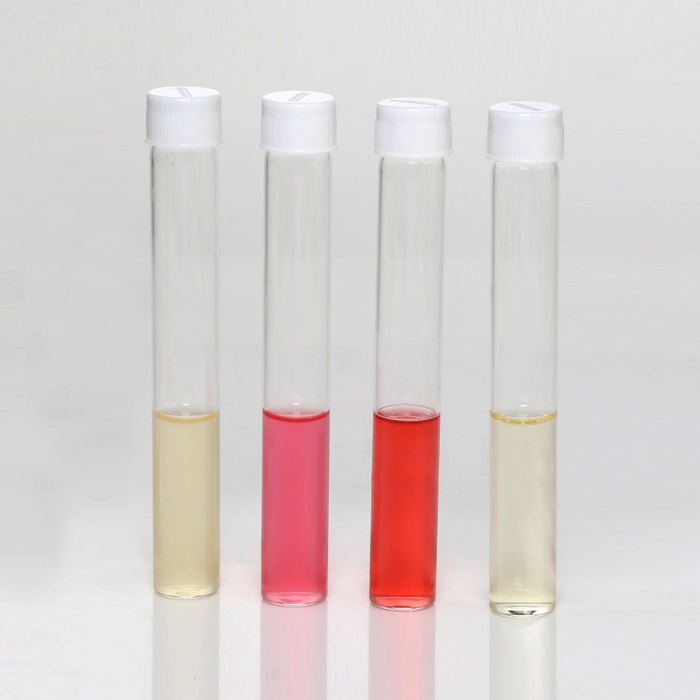
| Cronobacter sakazakii ATCC 29544 (00214*) | 50-100 | luxuriant | negative reaction | Positive reaction, bright red colour |
| Cronobacter muytjensii ATCC 51329 (00213*) | 50-100 | luxuriant | negative reaction | Positive reaction, bright red colour |
| #Klebsiella aerogenes ATCC 13048 (00175*) | 50-100 | luxuriant | negative reaction | Positive reaction, bright red colour |
| Enterobacter cloaccae ATCC 13047 (00083*) | 50-100 | luxuriant | negative reaction | Positive reaction, bright red colour |
| Cultural Response as per FDA BAM | ||||
| Salmonella Typhimurium ATCC 14028 (00031*) | 50-100 | luxuriant | Positive reaction, bright red colour | negative reaction |
| Salmonella Enteritidis ATCC 13076 (00030*) | 50-100 | luxuriant | Positive reaction, bright red colour | negative reaction |
| Escherichia coli ATCC 25922 (00013*) | 50-100 | luxuriant | Positive reaction, bright red colour | negative reaction |
| #Klebsiella aerogenes ATCC 13048 (00175*) | 50-100 | luxuriant | negative reaction | Positive reaction, bright red colour |
| Klebsiella pnumoniae ATCC 13883 (00097*) | 50-100 | luxuriant | negative reaction | Positive reaction, bright red colour |
Key: *Corresponding WDCM numbers. # Formerly known as Enterobacter aerogenes
Store between 10-30°C in a tightly closed container and the prepared medium at 20-30°C. Use before expiry date on the label. On opening, product should be properly stored dry, after tightly capping the bottle in order to prevent lump formation due to the hygroscopic nature of the product. Improper storage of the product may lead to lump formation. Store in dry ventilated area protected from extremes of temperature and sources of ignition. Seal the container tightly after use. Product performance is best if used within stated expiry period.
User must ensure safe disposal by autoclaving and/or incineration of used or unusable preparations of this product. Follow established laboratory procedures in disposing of infectious materials and material that comes into contact with sample must be decontaminated and disposed of in accordance with current laboratory techniques (17,18).
| Product Name | MR-VP Medium, Granulated |
|---|---|
| SKU | GM070I |
| Product Type | Granulated |
| Physical Form | Granular |
| Origin | Animal |
| Packaging type | HDPE |
| References | 1.Voges O. and Proskauer B., 1898, Z. Hyg. Infektionskr., 28:20. 2.Clark W. M. and Lubs H. K., 1915, J. Infect. Dis., 17:160. 3.Barry A. L., Bernsohn K. L., Adams A. B., Thrup L. D., Appl. Microbiol., 1970, 20 (6), 866-870. 4.Branson D., Methods in Clinical Bacteriology, Springerfield, IL: Charles C Thomas, 1972, 32-33. 5.Cowan S. T., Cowan and Stuls Manual for the Identification of Medical Bacteria, 2nd Ed., Cambridge, Cambridge UniversityPress, 1974, 37,48. 6.MacFaddin J. F., 2000, Biochemical tests for Identification of Medical Bacteria, 3rd Ed., Lippincott, Williams and Wilkins,Baltimore. 7.MacFaddin J. F., 1985, Media for Isolation-Cultivation-Identification-Maintenance of Medical Bacteria, Vol. 1, Williamsand Wilkins, Baltimore. 8.Vaughn R. H., Mitchell N. B. and Levine M., 1939, J. Am. Water Works Association, 31:993.9.Ruchhoft C. C., Kallas J. G., Chinn B. and Coulter E. W., 1931, J.Bacteriol., 22 : 125.10.Werkman C. H., 1930, J. Bact., 20: 121. 11.OMeara R. A. Q., 1931, J. Path. Bacteriol., 34 : 401. 12.Levine M., Epstein S. S. and Voughn R. H., 1934, Am. J. Publ. Health, 24: 505. 13.Ewing W. H., 1986, Edwards and Ewings Identification of Enterobacteriaceae, 4th Ed., Elsevier Science Publishing Co.,Inc., New York. |