HiMedia Laboratories GmbH, Marie-Curie-Str. 3, 64683, Einhausen, Germany.


 Your enquiry has been submitted
Something problem with the server. Try again.
 Your enquiry has been submitted
Selenite F Broth is recommended as an enrichment medium for the isolation of Salmonella species from faeces, urine or other pathological materials in accordance with Indian Pharmacopoeia.
| Ingredients | Gms / Litre |
|---|---|
| Part A | |
| Peptone | 5.000 |
| Lactose | 4.000 |
| Disodium hydrogen phosphate | 10.000 |
| Part B | |
| Sodium hydrogen selenite | 4.000 |
**Formula adjusted, standardized to suit performance parameters
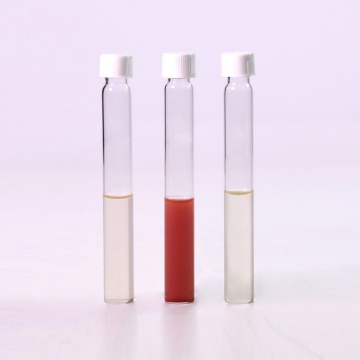
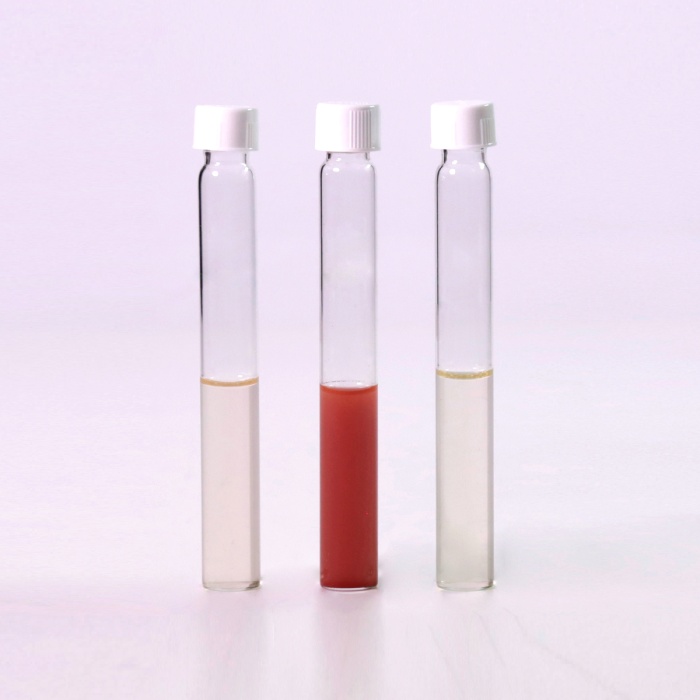
Suspend 4.0 grams of Part B in 1000 ml purified/ distilled water. Add 19.0 grams of Part A. Mix well. Warm to dissolve the medium completely. Distribute in sterile test tubes. Sterilize in a boiling water bath or free flowing steam for 30 minutes. DO NOT AUTOCLAVE. Excessive heating is detrimental. Discard the prepared medium if large amount of selenite is reduced (indicated by red precipitate at the bottom of tube/bottle).
Caution: Sodium hydrogen selenite (Sodium biselenite) is very toxic and corrosive agent and causes teratogenicity. Handle with great care. If there is contact with skin, wash immediately with lot of water
Klett (1) first demonstrated the selective inhibitory effects of selenite and Guth (2) used it to isolate Salmonella Typhi. Leifson fully investigated selenite and formulated the media. The formulation corresponds to that of recommended by the Indian Pharmacopoeia (3) for detection of Salmonella in foodstuffs, pharmaceuticals and pathological materials. Enrichment media are routinely employed for detection of pathogens in faecal specimens as the pathogens are present in a very small number in the intestinal flora. Selenite F Broth is useful for detecting Salmonella in the nonacute stages of illness when organisms occur in the test sample in low numbers and for epidemiological studies to enhance the detection of low number of organisms from asymptomatic or convalescent patients (4).
Peptone provides nitrogenous substances. Lactose maintains the pH of medium. Selenite is reduced by bacterial growth producing alkalinity. This causes increase in pH which can reduce the toxicity of the selenite and results in overgrowth of other bacteria. The acid produced by bacteria by lactose fermentation counters the high pH and neutralizes the medium. Sodium phosphate maintains a stable pH and also minimizes the toxicity of selenite.
Enriched broth is subcultured on differential plating media such as Bismuth Sulphite Agar (MM027), Brilliant Green Agar (MM016), XLD Agar (MM031) etc. Do not incubate the broth longer than 24 hours as inhibitory effect of selenite decreases after 6 - 12 hours of incubation (5).
Appearance
Part A: White to cream homogeneeous free flowing powder
Part B: White to cream homogeneous free flowing powder
Colour and Clarity of prepared medium
Cream to yellow clear to slightly opalescent solution
Growth Promotion Test
As per Indian Pharmacopoeia
Cultural characteristics observed when subcultured on MacConkey Agar(MM081) after an incubation at 35-37°C for 18-24 hours.
| Organism | Inoculum (CFU) | Recovery | Colour of colony |
|---|---|---|---|
| Salmonella Choleraesuis ATCC 12011 | 50-100 | good-luxuriant | colourless |
| Salmonella Typhi ATCC 6539 | 50-100 | good-luxuriant | colourless |
| Salmonella Typhimurium ATCC 14028 | 50-100 | good-luxuriant | colourless |
| Escherichia coli ATCC 8739 | 50-100 | none to poor (no increase in numbers) | pink with bile precipitate |
| Escherichia coli NCTC 9002 | 50-100 | none to poor (no increase in numbers) | pink with bile precipitate |
Store below 30°C in tightly closed container and the prepared medium at 2-8°C. Use before expiry date on the label.
| Product Name | Selenite F Broth (Twin Pack) Medium 11 (In accordance with IP 2007) |
|---|---|
| SKU | MM052 |
| Product Type | Regular |
| Physical Form | Powder |
| Origin | Animal |
| Packaging type | HDPE |
| References | 1. Klett A., 1900, Zeitsch Für Hyg. Und. Infekt., 33: 137. 2.Guth F., 1926, Zbl. Bakt. I. Orig., 77:487. 3.The Indian Pharmacopoeia 2007, Govt. of India, The Controller of Publication, Delhi 4.Murray PR, Baren EJ, Jorgensen JH, Pfaller MA, Yolken RH (editors) 2003, Manual of clinical Microbiology, 8th ed.,ASM, Washington, D.C. 5.Chattopadhyay W. and Pilford J. N., 1976, Med.Lab. Sci., 33:191. |
| Customized Product Available | No |